



From Kings Place to the Isle of Harris: Sam McShane | S1 E1
Sam is Artistic Director at Kings Place in London, where she leads a vibrant programming team and shapes the artistic vision of one of the UK’s most dynamic multi‑arts venues.
Prior to this, she was Creative Director at Manchester Camerata, leading the orchestra’s UK and international programming and establishing the ground‑breaking Camerata 360° Ruth Sutton Fellowship. She has also held roles including Head of Creative Programming at Manchester Camerata and Head of Artistic Planning at the Royal Conservatoire of Scotland, amongst others.
She brings a breadth of experience across the classical, contemporary, folk and jazz sectors, having worked with artists ranging from Martha Argerich, Jess Gillam, Daniel Pioro, Moishe’s Bagel, Fergus McCreadie, Rushil Ranjan, Ayanna Witter‑Johnson, Jean‑Efflam Bavouzet, Phillip Venables, Afrodeutsche and Speaker’s Corner Quartet.
Sam is currently on the board of Chamber Music Scotland and Manchester Camerata.

Episode 1 - Notes on Notes

Photo: Eric. Marinitsch
Silouan's Song (1991) is one of Arvo Pärt's most profoundly beautiful works, scored for string orchestra. With the subtitle "My soul yearns after the Lord…", this six-minute composition embodies the Estonian composer's mature tintinnabuli style—a technique he invented that creates music of extraordinary stillness, purity and spiritual depth.
The work is based on a deeply moving religious text in Russian written by St. Silouan the Athonite (1866–1938), a Russian monk from Mount Athos whose spiritual writings have had a profound influence on Orthodox thought. Although the work is instrumental, both the melody and rhythm are derived directly from the text—meaning this music could, in theory, be sung.
The Text (not sung, but the foundation of the music)
The text by St. Silouan that forms the spiritual and structural basis of the work is a prayer of profound longing:
"My soul yearns after the Lord, and I seek Him in tears... How sweet art Thou, O Lord, to the soul that seeketh Thee, and desireth to contemplate Thy countenance."
This is characteristic of Pärt's tintinnabuli works, where text shapes the DNA of the music even when no words are heard.
Silouan's Song exists in a timeless, meditative space that seems to transcend the ordinary flow of time. The music reveals the sacred quality of both sound and silence.
The piece inhabits a space that feels both vast and deeply personal. It captures what one writer called "the unbearable burden of the world, its grief and brokenness, while at the same time sounding an unmistakable note of pure, unwavering hope."
This Recording
Paavo Järvi & Estonian National Symphony Orchestra
Estonian conductor Paavo Järvi has a special affinity for Pärt's music, bringing both technical precision and deep spiritual understanding to his interpretations. His recording with the Estonian National Symphony Orchestra on the album Arvo Pärt - The Master of Pure Sound is considered one of the definitive performances, capturing the work's luminous beauty and transcendent stillness with exquisite care.
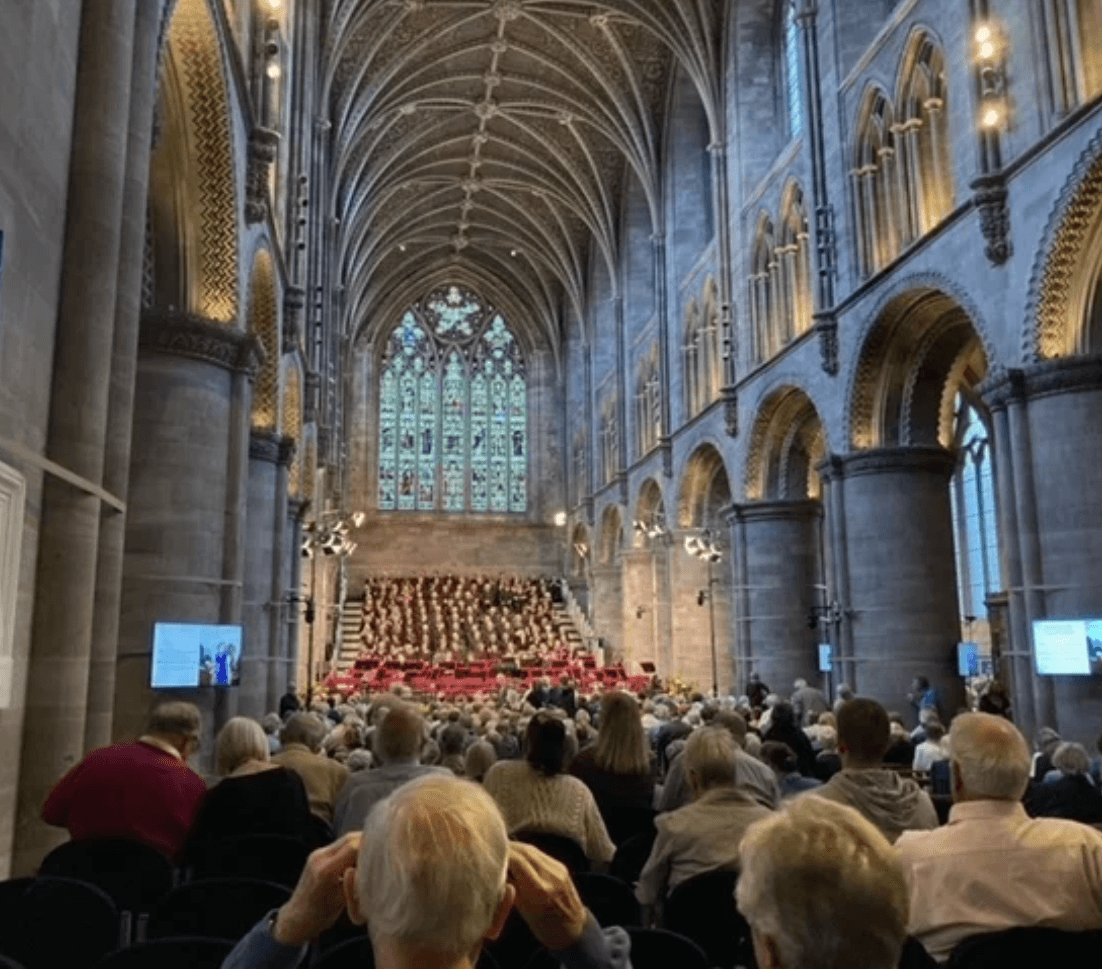
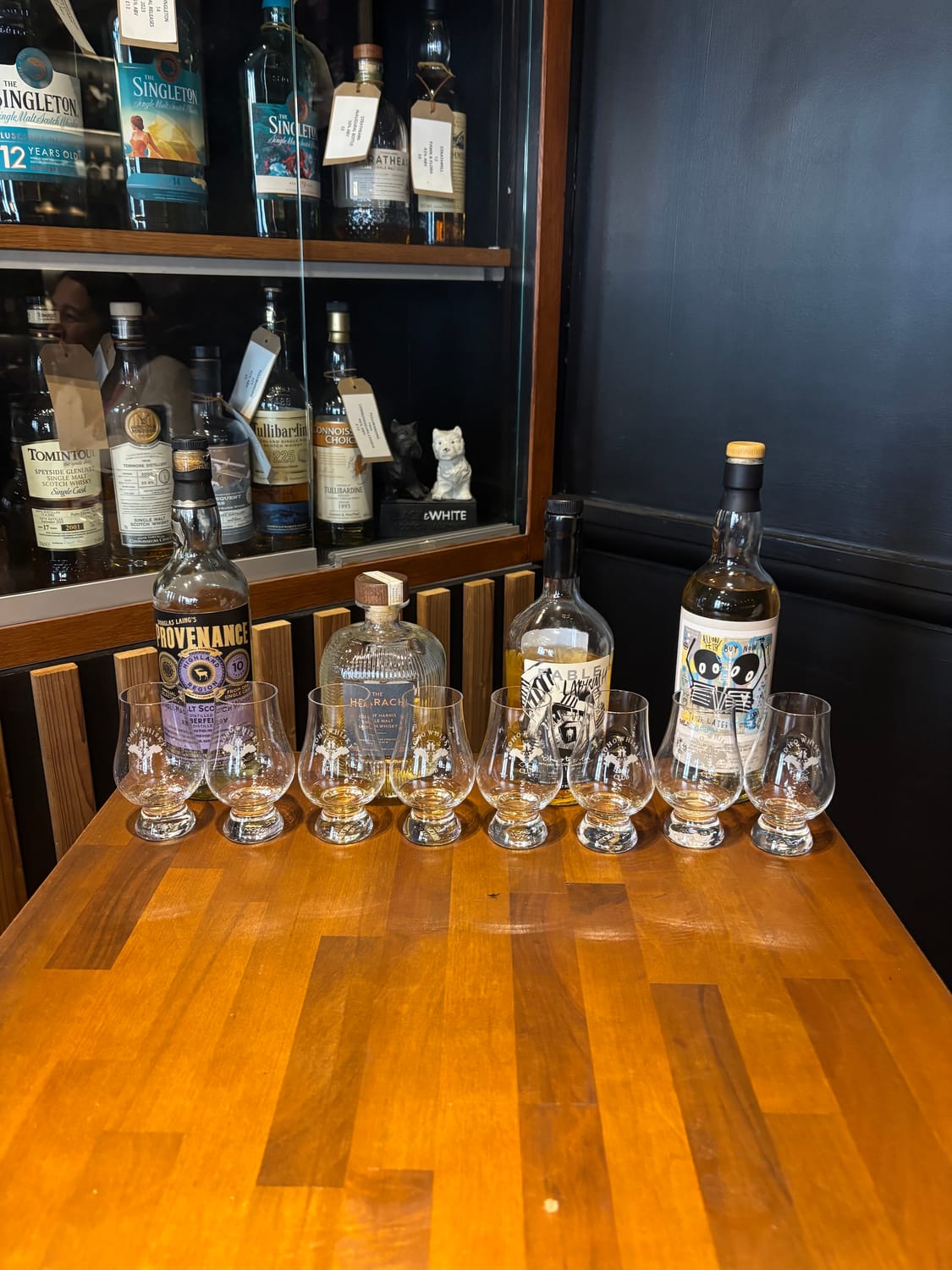
Like Pärt's Silouan's Song, this whisky to me embodied purity and simplicity. There's no excess, no unnecessary decoration—just the essential sweetness of honeyed malt and gentle fruit. The ascetic beauty of Pärt's style finds its parallel in this warm, well-rounded peardrops and Raspberry-influenced whisky, lovely and light with depth which relates to the piece. Both the music and the whisky speak sincerity, using minimal means to create maximum emotional resonance. The golden, luminous quality of the Aberfeldy mirrors the bell-like tones of Pärt's strings.

About the Whisky
This bottling comes from Douglas Laing & Co. (pronounced "DUG-luss LAYNG"), one of Scotland's most respected independent bottlers, and their Provenance range. Douglas Laing has been sourcing, blending and bottling exceptional Scotch whisky since 1948, building a reputation for quality single cask releases that showcase distillery character without interference.
The Provenance series is Douglas Laing's core range of single cask whiskies, each bottled without colouring or chill filtration to preserve the natural character and texture of the spirit. These are honest, unadorned expressions that let the distillery and cask speak for themselves.
Aberfeldy Distillery, located in the Scottish Highlands near Perthshire on the banks of the River Tay, was founded in 1896 by John Dewar & Sons. Known as "The Home of Dewar's," Aberfeldy produces the honeyed, fruity single malt that forms the heart of Dewar's blended whiskies. The distillery draws its water from the Pitilie Burn, a stream rich in alluvial gold deposits, and has a reputation for producing whiskies with a distinctly honeyed, malty sweetness and gentle character.
Tasting Notes
Nose: Honeyed malt, fresh orchard fruits (green apple, pear), gentle vanilla sweetness, light floral notes, and a hint of golden syrup.
Palate: Creamy malt, honeycomb sweetness, ripe stone fruits, subtle spice (cinnamon, ginger), buttery texture with a gentle warmth.
Finish: Medium length with lingering honey sweetness, soft oak, and a touch of citrus zest.
Character: This is a Highland single malt of gentle elegance—honeyed, malty, and approachingly sweet without being cloying. The Provenance bottling at 46% captures Aberfeldy's signature honeyed character while the refill cask allows the distillery's fruity spirit to shine through unmasked.
Sam’s Tasting Notes: Sam immediately noted the "lightness" of the color. While the nose had a "tad of smokiness" , the palate delivered a surprising pepperiness instead.
Highlights: We both picked up the pear drops and raspberry notes in this well-rounded Highland malt.
Thoughts: Sam felt the long finish matched the intensity of the strings—clean and clear, yet possessing significant depth.
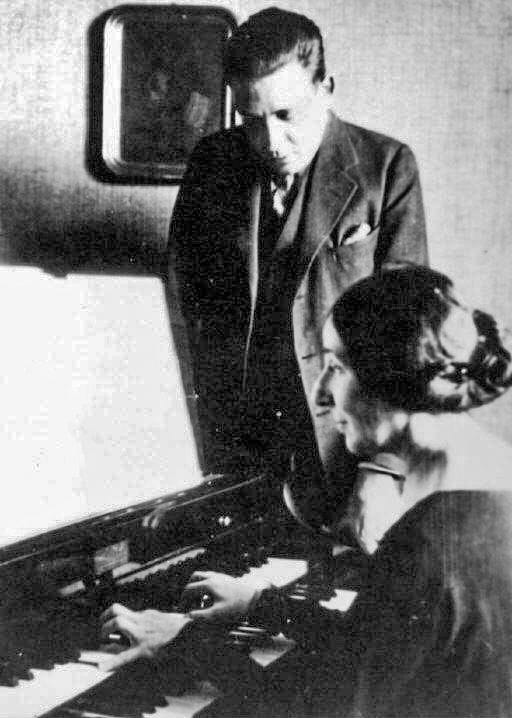
Photo: Unknown
The Elegy for Horn and Piano, FP 168, was composed in 1957 as a deeply felt tribute to the legendary British horn player Dennis Brain (1921–1957), who died tragically in a car accident at the age of just 36.
Poulenc had a profound admiration for Brain, who was widely considered the greatest French horn player of his generation and a pioneer who revolutionised the instrument's possibilities. When news of Brain's death reached Poulenc, he was devastated. The Elegy became his musical memorial—a work of profound grief, harsh beauty, and uncomfortable honesty.
The piece was premiered by the BBC in a broadcast on 17 February 1958, played by Brain's former Philharmonia colleague Neill Sanders, with Poulenc himself at the piano—a profoundly moving occasion.
Poulenc's Wind Sonatas. The video shown here is a departure from Sam's chosen recording, Kristofer Öberg & Bengt Forsberg, as I could not find a version on YouTube. Though please do listen to this recording on Apple and Spotify playlists I have curated.
The Elegy is one of Poulenc's least comfortable works. The sense of loss it distils is palpable, and it makes no attempt to soften or sentimentalise grief. Unlike the dreamy, poetic horn writing one might expect, this piece is filled with angular, dissonant intervals and violent emotional swings. It's as though Poulenc was determined to capture the raw, unprocessed shock of sudden loss.The music never finds resolution or comfort. It searches, questions, rages, and mourns—but does not conclude with consolation. This reflects an honest emotional journey through grief.
The Elegy's marking "très calme" (very calm) is almost ironic—while the tempo is indeed slow and the dynamic often quiet, the emotional content is anything but calm. It's the calm of shock, of numb disbelief, rather than peace.
Poulenc's Elegy is uncomfortable, unsettled music—grief that refuses consolation. The Hearach matches this with its own quiet complexity and refusal to conform to expectations. This isn't a big, aggressive Islay peat monster; it's a whisky of restrained intensity, where smoke and sweetness coexist in uneasy tension, never quite resolving. The maritime, windswept character mirrors the emotional weather of the Elegy—coastal, exposed, honest. Like Poulenc's memorial to Dennis Brain, this whisky carries the weight of history and loss (the lost distilling traditions of Harris) but also hope and renewal (the distillery's rebirth). Both works are profoundly human, refusing to soften difficult truths.
About the Whisky
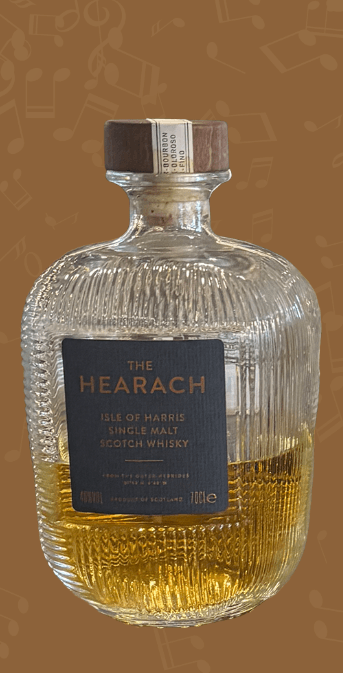
The Hearach (pronounced "HAIR-akh"; Gaelic for "person from Harris") is the first legal single malt whisky ever distilled on the Isle of Harris in the Outer Hebrides, marking a historic revival of distilling traditions lost during the Pabbay clearances of the 1840s.
The Isle of Harris Distillery opened in 2015 and released The Hearach in 2023 after years of patient maturation. The distillery is a true community project—every drop is distilled by local people, and the whisky represents an intimate conversation between people and place.
The Hearach is a lightly peated single malt, bottled at 46% ABV without chill filtration and without artificial colouring. Each batch marries spirits matured in first-fill ex-bourbon casks, Oloroso sherry butts, and Fino sherry butts, creating a harmonious marriage of influences that captures Harris's coastal character, craft, and culture.
Tasting Notes
Nose: Maritime freshness with sea spray and coastal air, light peat smoke (gentle and aromatic rather than aggressive), orchard fruits, honey, toasted cereal, hint of citrus peel, and a delicate sherry sweetness.
Palate: Elegant and refined—salted caramel, gentle peat smoke woven through honey and malt, dried fruits from the sherry influence, coastal minerality, vanilla, and a whisper of spice. The texture is silky and refined.
Finish: Medium-long with lingering coastal peat, gentle sweetness, sea salt, and a warming fade that recalls the island's windswept shores.
Character: This is an island whisky of quiet dignity and elegance—the peat is present but restrained, allowing the maritime character and careful cask selection to shine through. It feels handcrafted, personal, and deeply connected to place.
Sam’s Tasting Notes: Sam described the colour as similar to a white wine.
Highlights: She found the nose "heavier" than expected, with distinct meadow and floral notes.
Thoughts: Sam appreciated the "rounded" texture. This pairing worked because the whisky’s quiet dignity and local Harris story mirror the honest, handcrafted nature of Poulenc’s memorial

Photo: Deborah O’Grady
Doctor Atomic Symphony (2007) is a powerful, purely orchestral work by American composer John Adams (born 1947), derived from his 2005 opera Doctor Atomic. The symphony distills the opera's most gripping music into a three-movement concert work that stands independently as one of Adams' most intense and visceral compositions.
The opera—and by extension, the symphony—tells the story of J. Robert Oppenheimer and the scientists at Los Alamos in the hours leading up to the first atomic bomb test, codenamed "Trinity," on July 16, 1945. The work explores the moral complexity, terror, and awe surrounding humanity's creation of a weapon capable of destroying civilization itself.
The third movement, "Trinity," is the symphony's devastating climax: the explosion itself and its immediate aftermath. It's one of the most overwhelming and terrifying moments in contemporary orchestral music.
The Historical Context
On that fateful July morning in 1945, in the New Mexico desert at a site called the Jornada del Muerto (Journey of the Dead Man), the world's first nuclear weapon was detonated. Witnesses described a light brighter than a thousand suns, a heat that could be felt miles away, and a mushroom cloud that rose seven miles into the sky.
Oppenheimer himself later recalled that a line from the Hindu scripture, the Bhagavad Gita, came to his mind: "Now I am become Death, the destroyer of worlds."
Adams' music captures both the physical reality of the explosion and its metaphysical weight—the moment humanity crossed an irreversible threshold.
The "Trinity" movement is constructed to recreate the experience of the bomb's detonation in sound. The movement begins with an almost unbearable sense of anticipation and dread. Low brass, percussion, and strings create a ticking, mechanical atmosphere—the final countdown. Tension builds inexorably. When the bomb explodes, Adams unleashes the full sonic violence of the orchestra. The explosion is depicted through massive brass fanfares that sound like the fabric of reality tearing apart shrieking woodwinds in their highest registers, thundering percussion and densely layered strings creating a wall of sound
This is music of almost unbearable intensity—visceral, physical, overwhelming. After the violence of the detonation, the music shifts. What emerges is even more chilling than the explosion itself: a strange, glowing, post-apocalyptic landscape. High strings shimmer like radiation, simultaneously wondrous and horrifying. It's the sound of a world that has been fundamentally and irrevocably changed.
This Recording
Peter Oundjian & Royal Scottish National Orchestra
Canadian conductor Peter Oundjian who is known for his dynamic, committed performances of contemporary music. His recording with the Royal Scottish National Orchestra brings both technical precision and visceral drama to Adams' score, capturing the work's overwhelming power and its moments of terrible beauty with equal conviction. There is an added personal link to one of the players that Sam mentions in the Podcast at 26 minutes 33.
Adams' "Trinity" movement is about explosive, overwhelming power and the terrifying beauty of destruction. This cask strength Inchgower delivers that same intensity—it's a whisky that hits you with full force, undiluted and uncompromising. The labyrinth theme of this Fable release mirrors the complex, layered orchestration of Adams' score—you feel lost in the density of sound and flavour, following twisting pathways through spice, fruit, and oak. The high ABV creates a physical, visceral experience in the mouth, just as Adams' fortissimos are felt in the body. And like the strange, glowing aftermath of the Trinity explosion, this whisky has an eerie, toxic beauty—sweet nectarine and honey married to aggressive spice and heat. It's thrilling and complex whisky.
About the Whisky
Fable Whisky is an independent bottling company founded by Calum Lawrie (formerly at Diageo and Copper Dog) and Andrew Torrance (formerly at Morrison Bowmore and William Grant & Sons), who combined their 25 years of industry experience to create exceptional single cask releases.
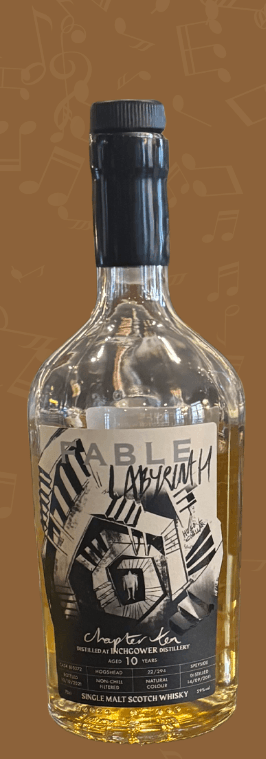
The entire Fable brand centres around storytelling—hence the name. Each release is a "Chapter" with its own illustrated narrative, characterised by striking black and white illustrated labels featuring unique animations and illustrations designed by Hugo Cuellar, a London-based Bolivian illustrator.
Chapter 10: "Labyrinth" tells the story of a piper who bested the fairies in a musical contest. "Furious at being bested by a human, the fairies departed, leaving a labyrinth of mazes behind them to trap the poor piper inside..."
This bottling comes from Inchgower Distillery, a Speyside distillery located in Banffshire near the mouth of the River Spey. Founded in 1871 as "The Great Distillery of Inchgower," it's known for producing a distinctively spicy, coastal-leaning spirit with an underlying waxiness. Inchgower's intense spiciness comes from a hotter-than-usual second water during mashing, and the steeply angled lyne arms capture weightier elements, creating a spirit with more body than typical Speyside malts.
This 10-year-old expression was matured in a refill hogshead and bottled at cask strength (typically between 53-59% depending on the specific cask).
Tasting Notes
Nose: Honey, melon, banana and coconut. With water: ripe green apple pie, floral freshness.
Palate: Vanilla, spices, mandarins, marshmallow. Fresh yellow fruit, bitter lemon and some ginger. With water, a nuttier green note comes through.
Finish: Candied nectarine sweetness, faint almond notes, lingering spice.
Character: This is a whisky of intense, concentrated energy—cask strength power married to Inchgower's distinctive spicy, waxy character. There's a complexity here that unfolds in layers, revealing different facets with time and dilution.
Sam’s Tasting Notes: The nose was described as bold and plummy. Sam also picked up a cider-like quality.
Highlights: Sam’s immediate reaction was: "It packs a punch!"
Thoughts: This was Sam’s favourite whisky of the afternoon. She found the "width" and "fatness" of the flavour perfectly matched the overwhelming wall of sound and massive brass fanfares in Adams' score.

Photo: Gem Harris
About the Piece
Nautilus is a thrilling orchestral work by British composer Anna Meredith (born 1978), one of the most exciting and innovative writers in contemporary music currently. Meredith has built a career that defies categorisation, moving fluidly between concert halls, clubs, art galleries, and film scores. Her music fuses the energy of electronic dance music with the sophistication of contemporary classical composition, creating sounds that feel simultaneously cerebral and visceral, rigorous and joyful.
Nautilus embodies Meredith's signature approach: propulsive, rhythmically complex, texturally inventive, and unapologetically exuberant. The piece takes its title from the nautilus shell, whose spiralling chambers follow the mathematical pattern of the Fibonacci sequence—a pattern that appears throughout nature and has fascinated artists and composers for centuries.
Anna Meredith's music is instantly recognisable for its kinetic energy, intricate rhythmic layering, and sheer fun. Nautilus epitimises this style. The piece is built on relentless, motor rhythms that create an almost physical sense of forward momentum. Meredith layers different rhythmic patterns on top of each other—some fast, some slow, some syncopated—creating a dense, interlocking texture that feels like a precision machine or an intricate clockwork mechanism. The result is hypnotic and exhilarating.
Meredith uses the full orchestra with bold, imaginative timbral choices. She favours bright, punchy articulations—sharp brass stabs, percussive string attacks, glittering high woodwinds. The orchestration has a contemporary, almost electronic quality, even though it's played by acoustic instruments. It's designed to make you move, to make your heart race.
This work bridges the worlds of contemporary classical and electronic/experimental music. And would feel equally at home in a concert hall, at a contemporary music festival, or in a club. It has the intellectual rigour of art music and the visceral thrill of dance music.
Meredith describes her work as being about "maximising joy" and "creating controlled chaos." She's interested in what happens when you push instruments to their limits, when you layer complexity upon complexity, and when you embrace the physical, bodily experience of rhythm and sound.
This Recording
Dalia Stasevska & BBC Symphony Orchestra
Finnish conductor Dalia Stasevska is one of the most dynamic young conductors on the scene, known for her passionate advocacy of contemporary music and her electrifying performances. Her collaboration with Anna Meredith and the BBC Symphony Orchestra brings fierce commitment, technical precision, and infectious energy to Nautilus, capturing the work's thrilling momentum and joy.
Anna Meredith's Nautilus is about maximalist energy, controlled chaos, and exuberant joy—more is more. This young, vibrant Tomatin matches that aesthetic perfectly. It's a whisky that refuses to sit still, packing layer upon layer of unexpected flavour into every sip: grass, honey, lemons, tropical fruit, smoke, and those funky IPA-like hop notes. Like Meredith's intricate rhythmic layering, this whisky presents multiple flavours happening simultaneously—fresh and fruity one moment, smoky and earthy the next—creating a dense, interlocking texture that's hypnotic and exhilarating. The bright, punchy fruitiness mirrors Meredith's sharp brass stabs and glittering orchestration, while the unexpected curveball of smoke reflects the composer's love of surprise and controlled chaos. Both the music and the whisky are young, bold, and unapologetically joyful—they celebrate complexity, surprise, and the sheer exhilaration of experiencing something that keeps you on your toes.

About the Whisky
Cut Your Wolf Loose is both a specialist whisky bar in Brighton and an independent bottling label, founded by Seb Woolf. With a background steeped in whisky expertise, Cut Your Wolf Loose has built a reputation for stocking an incredible array of small batch and single cask whiskies from some of the best independent bottlers, while also releasing their own carefully selected indie bottlings.
Their releases often come from collaborations with other whisky specialists and venues, resulting in unique, limited-edition bottlings that showcase exceptional cask selection and an uncompromising commitment to quality.
This particular release is Strathdearn Tomatin 7 Year Old Single Cask Edition #9, bottled in 2024 from a single refill hogshead at cask strength. "Strathdearn" refers to the strath (valley) where Tomatin distillery is located. The bottling features artwork by artist Skeleton Cardboard and is limited to just 262 bottles.
What makes this bottling especially intriguing is that it's suspected to have been distilled as part of Tomatin's Cù Bòcan peated run—a special production that happens for just one week per year using lightly peated Scottish barley—or aged in a refill cask from this run, giving it a rare and distinctive flavor profile rarely seen in independent Tomatin bottlings.
Tomatin Distillery is located in the Scottish Highlands, around 16 miles south of Inverness. Founded in 1897, it has a remarkable history: during the 1970s expansion, it became the largest malt whisky distillery in Scotland with 23 stills and a capacity of 12 million liters per year. After going into liquidation in 1986, it was rescued by Japanese company Takara Shuzo, making it the first Scottish distillery under Japanese ownership. Today, with 12 stills, Tomatin produces around 5 million liters annually and is known for its light, fresh, and fruity Highland character with gentle spice.
Tasting Notes
Nose: Grassy and sweet, like a summer meadow watered with mead. Summery freshness with a bright, uplifting quality.
Palate: Lemons and funky IPA-style fruity notes—think mangos and bananas. Ex-bourbon sweetness gently tucked into bed by a surprising smoky curveball that arrives unexpectedly.
Finish: Long and lingering, a little bit earthy with more of those tropical IPA hoppy notes continuing to develop.
Character: This is a whisky of youthful exuberance and complexity—59.4% ABV cask-strength power that delivers fresh, bright fruitiness alongside unexpected, gentle smoke. The combination of grassy sweetness, tropical fruit, citrus zing, and subtle peat creates a whisky that's both refreshing and intriguing, with layers that unfold as you explore it.
Sam’s Tasting Notes: Sam described this Highland malt as peppery and direct.
Highlights: She enjoyed the balance of salt and sweet, describing the finish as having a "umami" quality.
Thoughts: The "bouncy" rhythms of the music found a match in this young, exuberant whisky, which Sam noted packs a punch while remaining refreshing
A link to the full 24-minute Symphony - Dr Atomic symphony by John Adams
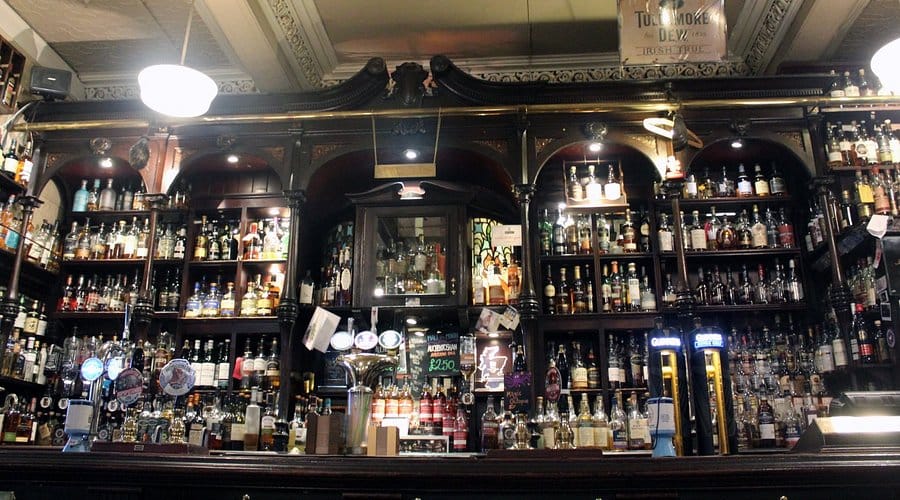
The Pot Still - Worth a Visit if you are in Glasgow
Further listening: Tchaikovsky Symphony number 5, which Sam highlights on the podcast 25 min 28 secs with an epic Horn Solo


POST CATEGORY
More of Naomi's World

The Music and Whisky Pairing you never realised you needed!
Please Drink Responsibly
Created with systeme.io