



From Fairy Distance to the Japanese Grain: Dobrinka Tabakova | S1 E3
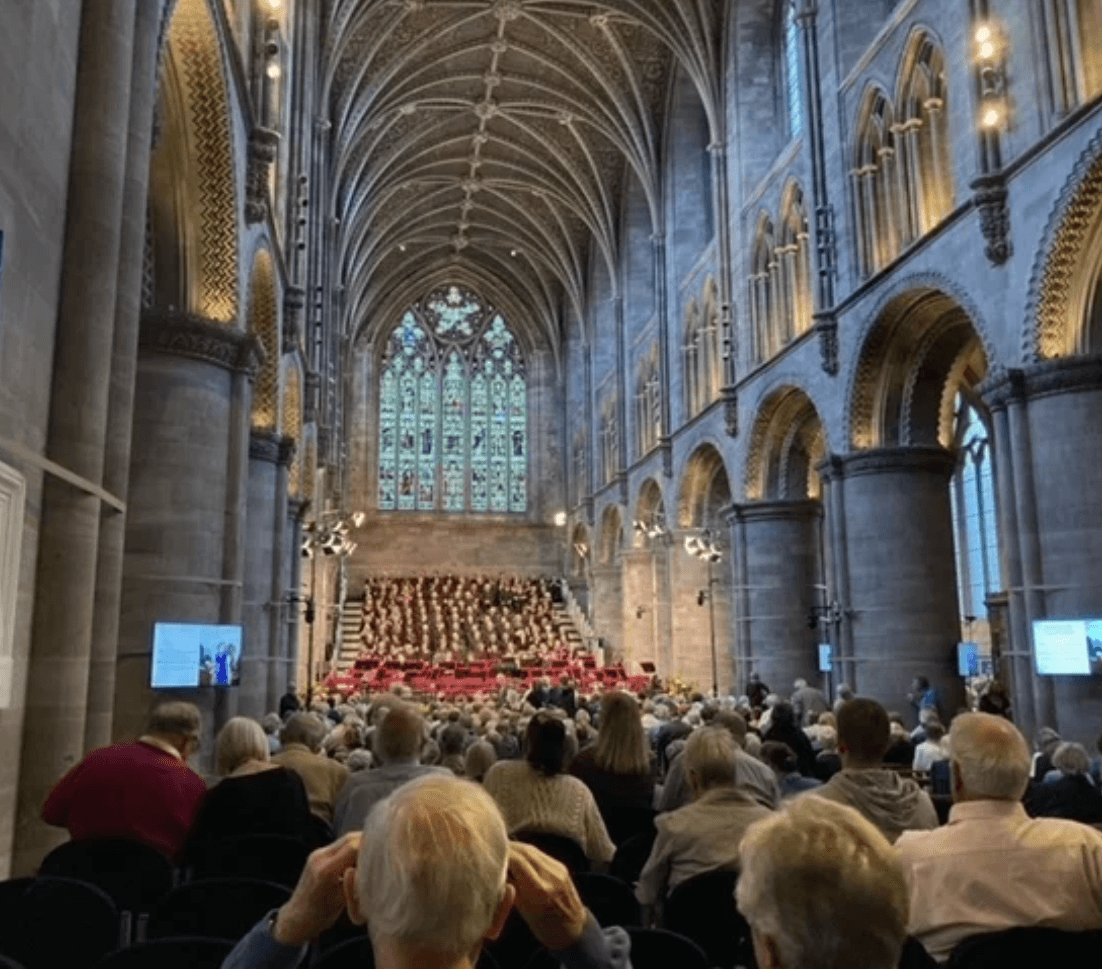
Photo: Benjamin Ealovega
Dobrinka Tabakova is a Bulgarian-British composer whose music is admired for its warmth, clarity and emotional depth. In 2023, she received an Ivor Composer Award for Swarm Fanfares, written for the Hallé Youth Orchestra.
Her profile has been shaped by major residencies, including Composer in Residence with the BBC Concert Orchestra from 2017 to 2021, resident composer roles with the Hallé Orchestra, Truro Cathedral and the MDR Leipzig Radio Symphony Orchestra.
Tabakova’s recordings have been especially notable. Her debut album String Paths on ECM Records was nominated for a Grammy in 2014, her choral album with Truro Cathedral Choir and the BBC Concert Orchestra was a Gramophone’s Critics’ Choice in 2019, and her Hallé orchestral album was nominated for a BBC Music Magazine Award in 2024. A second ECM album- Sun Triptych was released last year and received the BBC Music Magazine Premiere Award at the 2026 ceremony.
Tabakova graduated from the Guildhall School of Music & Drama and received a doctorate from King’s College London. Among her major projects are the cantata Immortal Shakespeare for Shakespeare’s 400th anniversary, Centuries of Meditations for the Three Choirs Festival, Earth Suite for the BBC Concert Orchestra, and The Patience of Trees for the Manchester International Festival, as well as concerti for Cello, Viola, Violin, Two Pianos and Accordion. Forthcoming projects include a new work for the Elbphilharmonie Organ and a large scale choir and orchestra work for the 2027 Three Choirs Festival. An album of her chamber works will be released on NMC Records this autumn.

Episode 3 - Notes on Notes
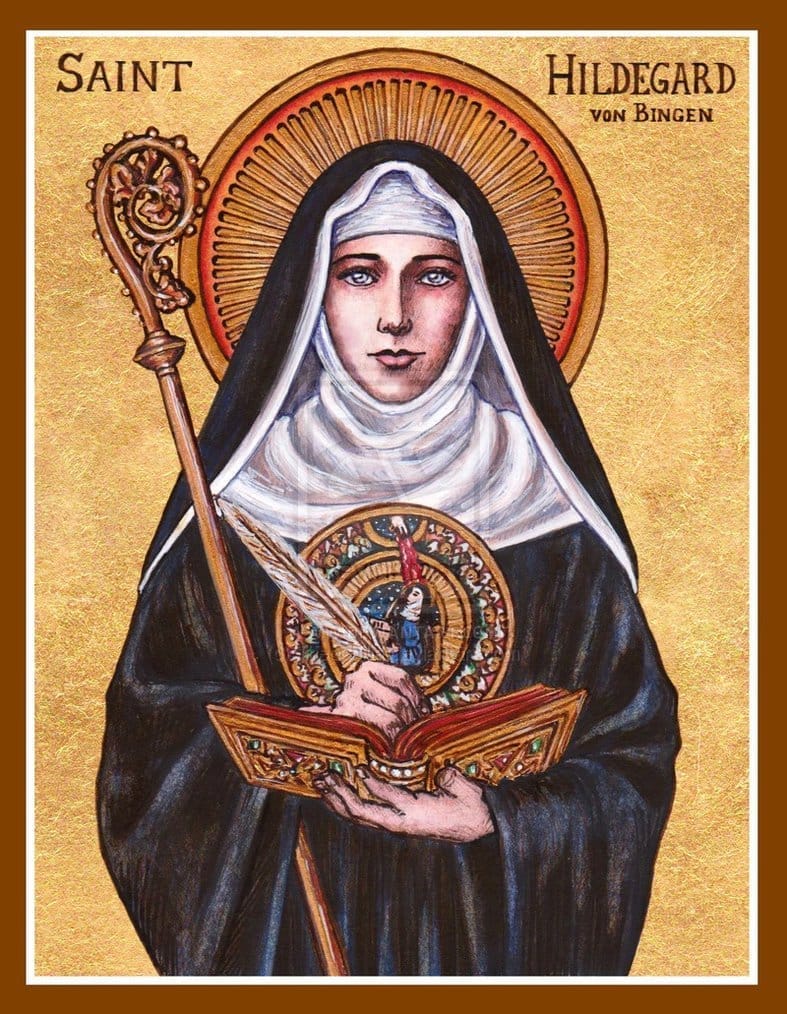
© Japan Art Association, The Sankei Shimbun
About the Piece
This is a fascinating piece of music. The work is "Silenzio," a five-movement suite for bayan (Russian chromatic button accordion), violin, and cello, written in 1991 by Sofia Gubaidulina.
The fourth movement, "IV. Eighth note = 152", sits inside a work where all five movements are titled simply by their metronome markings. For Gubaidulina, a deeply spiritual composer, silence is never just the absence of sound. It is an active, mystical ground from which something grows. Much of the piece hovers on the threshold between sound and silence, with extreme quiet dynamics that force the listener to lean in.
The first three movements are slow, sparse and contemplative, building tension within that fragile stillness. Movement IV is the eruption: a short, frenetic burst at a very fast tempo. It feels like the moment when all that charged silence suddenly discharges.
You can hear it as:
A kind of spiritual climax or ecstatic revelation.
A human cry, where suffering and passion finally break through.
A structural release after Gubaidulina’s long, numerically structured buildup.
The final movement then tries to reconcile the two worlds: the quiet meditation and the violent outburst, ending in something like an ecstatic lament.
Both the music and the whisky have subtle changes with many little movements. Silencio, particularly movement 4, chosen here, has a really shimmery accordion sound. It's got understated beauty and fragility, which Linkwood as a single malt also shows in the lovely Flora and Fauna bottling. Both whisky and music are wonderfully sonorous and can be listened to or drunk again and again. One that Dobrinka felt she could have a shot of every day ... to keep the Doctor away!

About the Whisky
The Linkwood 12 Year Old Flora & Fauna is a single malt from Speyside, part of Diageo’s Flora & Fauna series showcasing distilleries that are rarely seen as single malts. Linkwood itself produces a light, fruity, floral spirit that is highly prized in blends such as Johnnie Walker and White Horse.
Here you get a light yet complex dram with abundant floral and garden‑fruit notes, hints of vanilla, cedar and spice, and a rich, slightly oily mouthfeel with nutty cereal notes and an aromatic, drying finish. Matured in American oak refill casks and bottled at 43%, it is the only official Linkwood under 22 years of age, so you get the spirit’s character more or less in full view.
Whisky Vitals
Origin: Linkwood Distillery, Speyside, Scotland
Casks: Matured in a combination of ex-bourbon and refill casks
Style: Fruity and floral Speyside single malt
Character: A classic "hidden gem" of Speyside; elegant, fresh, and civilised
Tasting Notes
Nose: Floral and citrusy with light white wine notes and a hint of vanilla.
Palate: Much warmer and rounder than the nose suggests; mature and smooth with a broad, multi-layered profile.
Finish: Long-lasting development of aromas and tastes that continue for several minutes.
Dobrinka’s Tasting Notes: Dobrinka was struck by how it felt "older than 12 years," noting that while the nose is light, the liquid itself is much "broader" and sophisticated.
Highlights: We were both surprised by the "Quality Street" chocolate notes and the oily, viscous "legs" that coated the glass.
Thoughts: Dobrinka loved its "mature" and "smooth" flavour so much she joked she could "do a shot a day" to keep the doctor away.
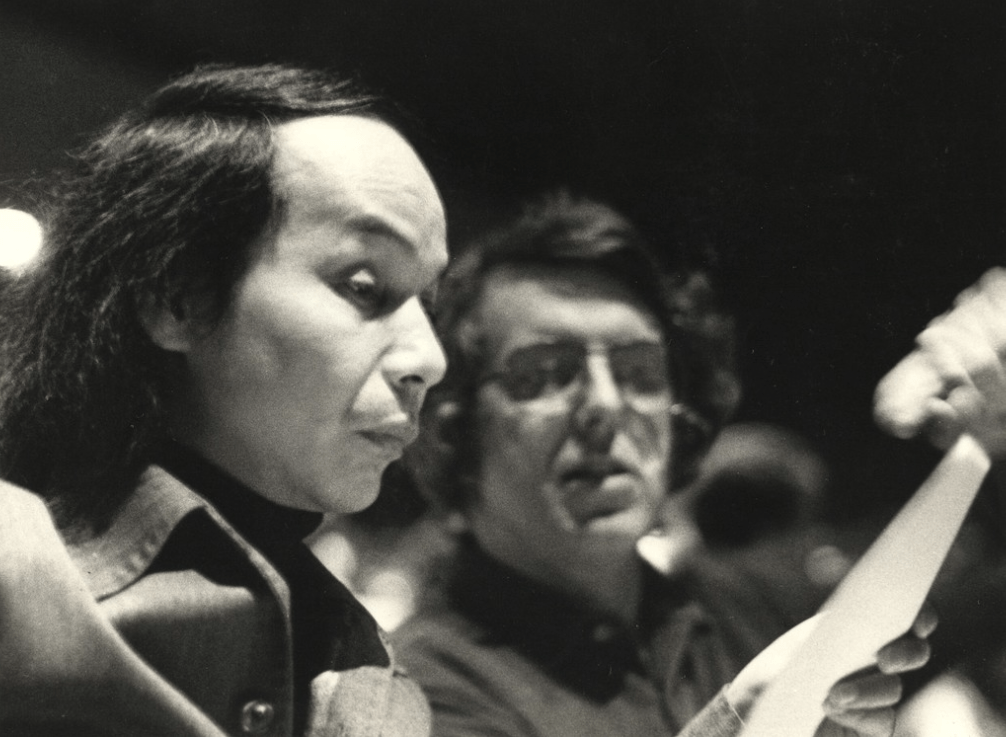
Photo: Marc Lieberman
About the Piece
This is one of Toru Takemitsu’s beautiful early works, written in 1951 for violin and piano when he was just 21. Despite being an early piece, Distance de fée was a breakthrough, announcing the sound-world he would become known for.
Takemitsu was largely self‑taught, absorbing Western music through American Forces radio after the war, and later becoming a crucial bridge between East and West. His music blends French impressionist colour (Debussy, and especially Messiaen) with Japanese ideas of space, silence (ma) and nature. He was a master of orchestral and instrumental colour, often described as “painting” with sound.
The title Distance de fée – “Distance of a Fairy” – comes from a surrealist poem by Shuzo Takiguchi. Rather than telling a story, the piece creates an atmosphere around this elusive, transparent creature “in an air’s labyrinth,” barely visible, like a spring breeze.
The violin is the fairy: hovering, delicate and hard to pin down, rarely offering a clear, singable tune. It appears and disappears in and out of the piano’s lush, shimmering harmonies, which create the dream‑landscape for it to inhabit. The harmony leans on Messiaen‑like octatonic colours, and the whole piece feels suspended in time: hazy, fragile, luminous.
Musical Style & the Recording
Like Takemitsu's beauty yet slightly edgy violin over the top. Nikka likes the music, it is wonderfully full-bodied with the romantic reminiscences of the French composers he was influenced by. With a slightly sharper edge as agrain whisky. The undeniable coffee tones are alluring even though that's incidentally linked ot a still with a name similar.

About the Whisky
Nikka Coffey Grain is a single grain whisky from Nikka, distilled predominantly from corn in traditional Coffey column stills. (The “Coffey” refers to Aeneas Coffey, who patented this still design in 1830, not to the drink.) Grain whisky can be made from various cereals and is usually distilled in continuous stills, giving a very smooth, mellow spirit.
Released in 2012, this has become a signature bottling for Nikka. The spirit is matured in re‑filled, re‑made and re‑charred American oak casks, which bring out sweet, mellow flavours in the distillate. In the glass you get that soft corn sweetness, vanilla, coconut, citrus, light tropical fruit and gentle oak – a silky, almost custardy texture that feels like a quietly glowing backdrop rather than something that shouts.
Whisky Vitals
Origin: Nikka Whisky (Miyagikyo Distillery), Japan
Casks: American oak (re-charred and refill)
Style: Original Japanese single grain whisky, distilled mainly from corn
Character: Exotic, fruity, and unconventional with a creamy texture
Nose: Rich chocolate mousse, burnt sugar, and a mild, enveloping sweetness.
Palate: Surprisingly stronger and "pepperier" than the aroma implies; sophisticated with notes of coffee and dark chocolate.
Finish: A bitter-sweet aftertaste reminiscent of dark cocoa that lingers elegantly.
Dobrinka’s Tasting Notes: Dobrinka noted the "steeliness" and "sophistication," admitting she genuinely picked up coffee and chocolate notes even after learning the name comes from the inventor of the still, Aeneas Coffey.
Highlights: The rich, golden color and the surprising "punch" on the palate compared to its mild nose.
Thoughts: We discussed how this "dreamy" whisky mirrors the ethereal quality of Takemitsu's music.
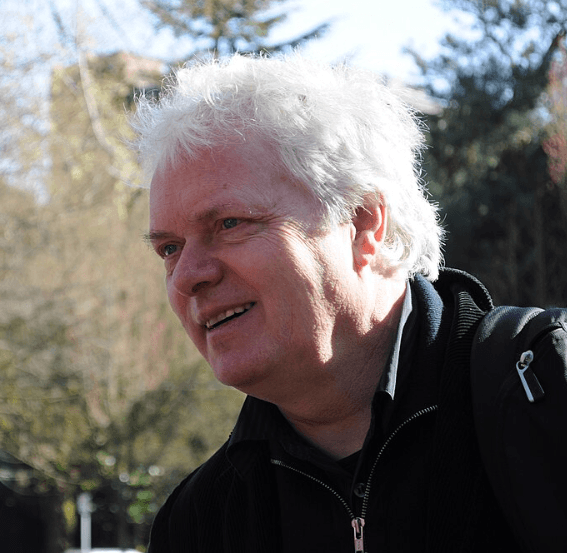
Photo:Joe Mabel
About the Piece
This is a powerful and complex slice of contemporary music theatre from Heiner Goebbels (born 1952), a major German composer and director whose work often sits between concert, radio play and staged performance. Rather than traditional symphonic argument, he builds vast sonic collages, where archival recordings, spoken texts and live orchestra coexist, argue and resonate with each other.
The movement here comes from Part IV “Wax and Violence,” in the large‑scale orchestral work A House of Call: My Imaginary Notebook (2020), a 100‑minute epic built from voice recordings Goebbels has collected from archives over decades.
The overall concept: A House of Call is like a notebook of voices from around the world, many captured on fragile early recordings such as wax cylinders. The orchestra “calls” these voices back into the present and creates a new sonic space around them.
In “Wax and Violence”, Goebbels makes explicit the link between those early recording technologies and the colonial violence that often sat behind them. European ethnographers travelled the world in a collecting frenzy, “capturing” the sounds of non‑Western cultures and filing them away in European archives, often ignoring or participating in the political violence that surrounded them.
The specific movement chosen, sometimes subtitled “Ti gu go Inîga mî (Some of Them Say)”, uses a 1931 archival recording from Namibia by Hans Lichtenecker, capturing the voice of a man from the Nama people, Haneb. This comes barely a generation after the Herero and Nama genocide (1904–1908), when German colonial troops systematically murdered much of the population.
Goebbels sets this voice alongside other recordings from the same session, including Nama schoolchildren forced to sing the German hymn “Nun danket alle Gott”, and lets the orchestra react to, surround and comment on them. The result is music that is as much about listening to history as it is about harmony or rhythm: a confrontation with the violence hidden in apparently “innocent” archival sound.
Musical Style & the Recording
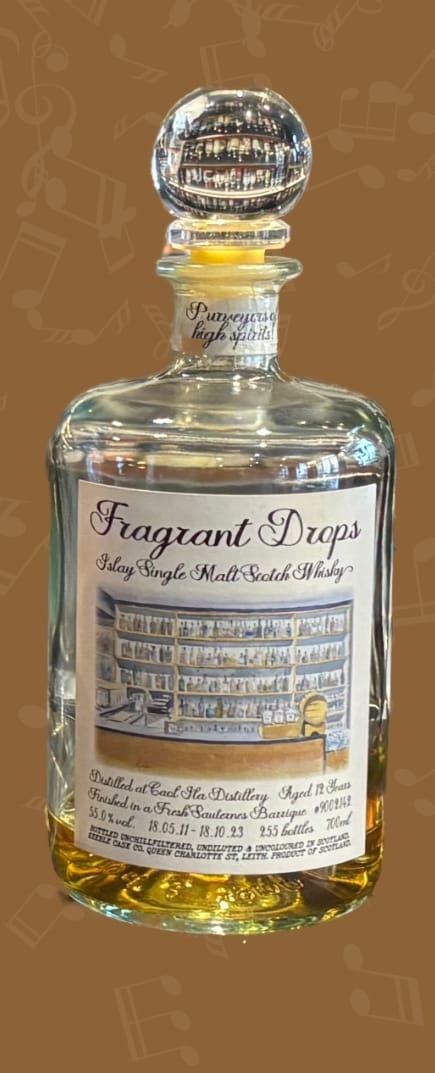
Goebbels music is quite haunting with the voices recorded on a wax cylinder; the music itself is incredibly restless and increasingly chaotic until you reach the end of the movement we focus on here. It shares a deeply intense story linked to German colonialism and genocide. We paired this with an incredibly special independent bottling from Fragrant Drops, from one of my favourite whiskies Caol Ila, which has been finished in Sauternes barrique. It is a wonderfully meaty complex whisky which has many dimensions and has the depth of flavour to match such a powerful piece.
About the Whisky
FThis independent bottling from Fragrant Drops (part of Keeble Cask Company in Leith, Edinburgh) takes Caol Ila’s clean, coastal Islay spirit and gives it an 18‑month finishing period in a fresh Sauternes barrique. Distilled on 18 May 2011 and bottled on 18 October 2023, it’s a 12‑year‑old release at 55.0% ABV, with just 255 bottles.
Independent bottlers like Fragrant Drops buy spirit or casks from distilleries and bottle them under their own labels, often exploring finishes or single‑cask expressions you would not see officially. Here you still get Caol Ila’s bright peat smoke, lemon and sea air, but wrapped in Sauternes notes of honey, apricot and white grapes, adding a luscious, almost golden sweetness over the top of something much more austere and salty.
Whisky Vitals
Origin: Caol Ila Distillery, Islay (Bottled by Fragrant Drops), Scotland
Casks: Finished in a sweet wine Sauternes Barrique
Style: Peated Islay single malt with a sweet wine influence
Character: A characterful, independent bottling focused on unfiltered, natural personality
Nose: A "smoke fire" lead followed by a big hit of vanilla and an unusual aroma of "smoked damp laundry."
Palate: A complex journey starting with a "puff of smoke" that transitions into buttery, round sweetness from the wine cask.
Finish: Unexpected shifts toward brine, salt, and sharp peat on the back of the throat.
Dobrinka’s Tasting Notes: Though not a fan of heavy peat, Dobrinka found this "really delicious" and "well-balanced," noting it was "fascinating" how the flavour shifts "sideways" as you drink it.
Highlights: The "Soho Whisky Club" connection—the label was painted by club staff member Max Panks.
Thoughts: We both felt this was a "special occasion" whisky that provides a true "journey" for the palate.
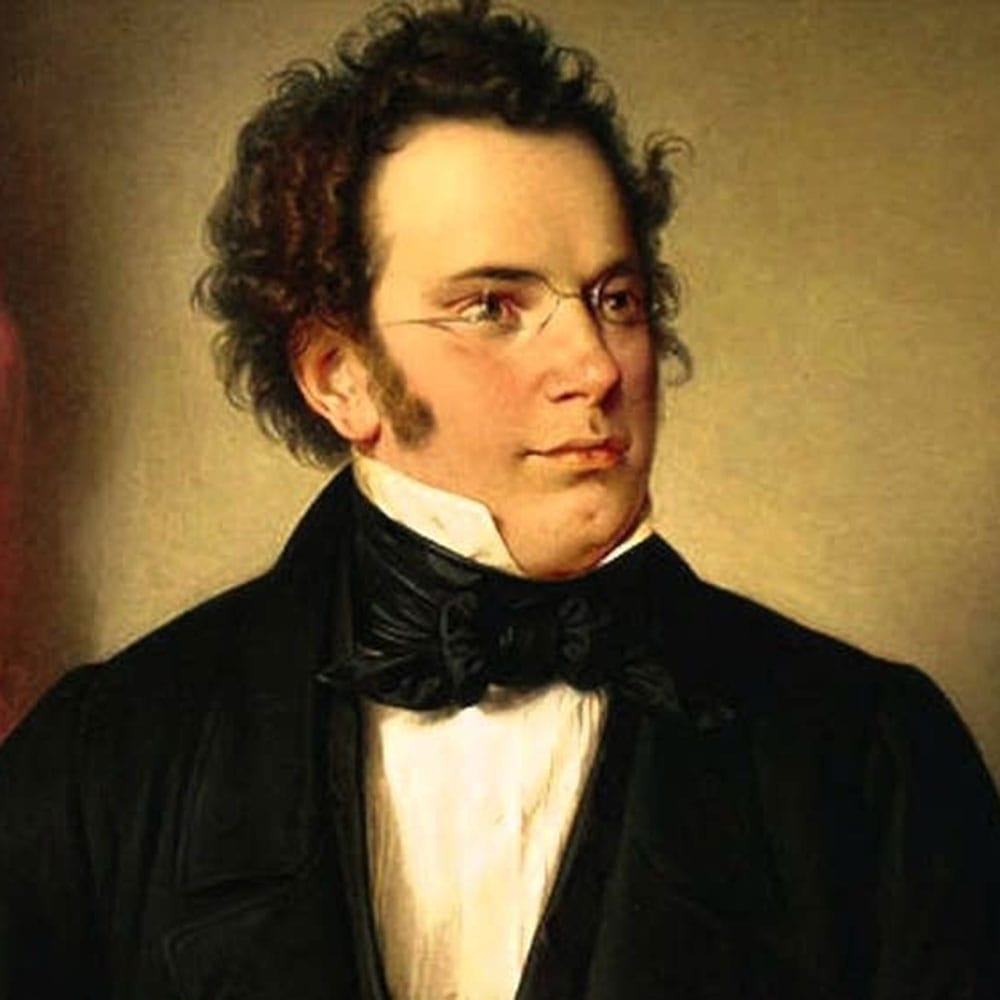
Painting: Wilhelm August Rieder
About the Piece
This is one of the most magnificent and demanding works in the chamber music repertoire: the Fantasie in C major, D. 934 for violin and piano, written in December 1827. Schubert is in the final year of his life, writing at astonishing speed – this piece sits alongside works like the song cycle Winterreise and the last piano sonatas.
The Fantasie is a single, continuous span, but you can hear four broad sections:
Andante molto: a slow, shimmering introduction where the violin floats over tremulous piano chords, creating a sense of mystery and distance.
Allegretto: a more playful, dance‑like section in A minor that builds in energy and virtuosity.
Andantino (Theme and Variations): the emotional core, built on Schubert’s own song “Sei mir gegrüßt!” ("I Greet You!"). The piano introduces the song, then the two instruments move through a series of increasingly brilliant, intricate variations.
Allegro vivace (Finale): the theme returns, transformed into a triumphant, marching conclusion that pushes both players to the edge technically.
It is important that this is a true duo, not a violin showpiece with piano accompaniment. Schubert wrote it for two virtuosos – the violinist Josef Slavík (whom Chopin called “a second Paganini”) and the pianist Carl Maria von Bocklet – and both parts are fiendishly difficult.
The premiere in January 1828 was a failure: audiences found it too long, too demanding, and it was largely forgotten until after Schubert’s death. Now it is recognised as one of his late, visionary masterpieces, with that mixture of lyricism, shadow, and almost overwhelming emotional scale that defines his last year.
Musical Style & the Recording
Schubert, such a well-known composer, has such a lyrical style f writing this violin and piano fantasie, no exception, I felt this needed a whisky that was an institution, to celebrate his stature, and I decided to pair it with Springbank 15. A distillery with such a great reputation these days, I knew this sherry-forward expression would pair nicely with such a romantic chamber work.

About the Whisky
What makes Springbank 15 special is its rich, complex profile driven by extended ex‑sherry cask maturation. You get dark fruit, chocolate and leather alongside Springbank’s signature peat, salinity and slightly funky, oily Campbeltown character. It is a more mature, weighty expression than the 10‑year‑old: deeply sherried, earthy and nutty, but still with that coastal edge.
For some drinkers, the heavy sherry influence can feel like it almost eclipses the “pure” distillery character; for others, that tension between sherry richness and Springbank’s austere, mineral core is exactly what makes it so compelling.
Whisky Vitals
Origin: Springbank Distillery, Campbeltown, Scotland
Casks: Predominantly Oloroso sherry matured (100% sherry for recent releases)
Style: Distinctly traditional, lightly peated, and oily Campbeltown malt
Character: A highly respected "institutional" dram, unchillfiltered and natural in colour
Tasting Notes
Nose: Toffee, burnt sugar, and a hint of Christmas cake with very vague background smoke.
Palate: Exceptional butterscotch smoothness; full-bodied and "really well-crafted."
Finish: A distinct peppery finish that allows it to stand up to much stronger peated whiskies.
Dobrinka’s Tasting Notes: Dobrinka was "very, very excited" to try this "hard to get hold of" dram, noting its "butterscotch and smoothness" immediately.
Highlights: The rich, toffee-like natural colour and its ability to feel powerful despite a lower ABV (46%) than the previous cask-strength dram.
Thoughts: We paired this with Schubert to match the "institutional" weight and "intense focus" of the music.
A link to Dobrinka's 2026 BBC Music Magazine award-winning Album Sun Triptych
Sofia Gubaidulina - Fachwerk for Accordion and Chamber Orchestra as recommended by Dobrinka Tabakova mentioned in the podcast at 20 minutes and 30 seconds
Listen to all of Brahm's, Fantasie in C and House of Call by Heine Goebels if you really want to Geek out!

POST CATEGORY
More of Naomi's World

The Music and Whisky Pairing you never realised you needed!
Please Drink Responsibly
Created with systeme.io