



From Hypnotic Minimalism to Hot-Climate Casks: Ben Hogwood | S1 E4
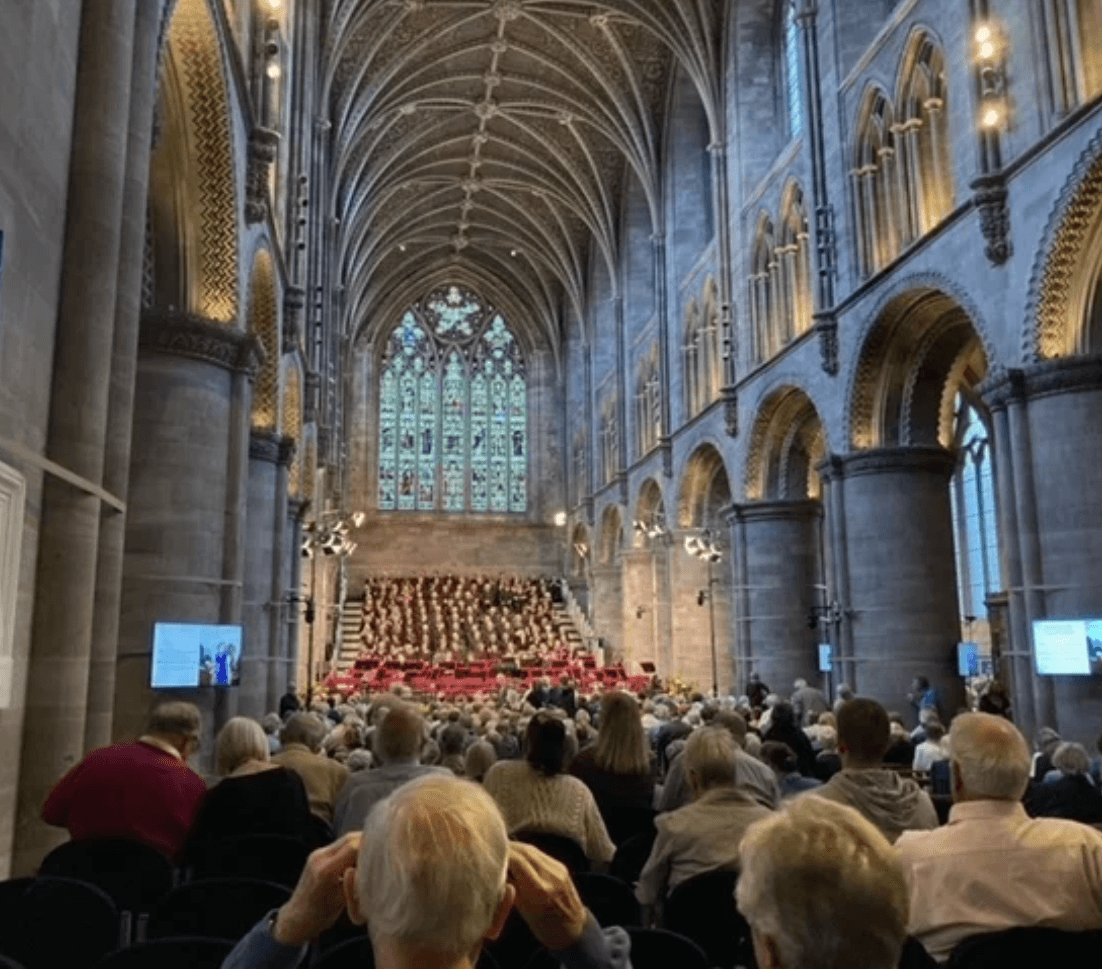
Photo:
Ben has always worked in the fields of classical music and data – usually with the objective of ensuring record labels and performers receive royalties when their recordings are broadcast or played in public. For nearly 20 years he helped administer these rights as Classical Repertoire Manager at PPL, working with orchestral players and choral singers in particular. Since 2020 he has been working for the Naxos Music Group, their artists and all the labels they distribute around the world, ensuring royalties and neighbouring rights are maximised and correctly distributed. For Naxos he also contributes booklet notes and helps with A&R recruitment in the UK.
Ben has had a lifelong passion for classical music in all its forms, long before studying it to degree level at the University of Surrey in Guildford. He combines this with a love of electronic and pop music on his website Arcana, writing also for musicOMH, where he has interviewed musicians and composers as widely varied as Steve Reich, Paul Weller, Tori Amos and Anna Thorvaldsdottir.

Episode 4 - Notes on Notes

Painting: Elias Gottlob Haussmann
About the Piece
Composed during J.S. Bach's time as Kapellmeister in Köthen (circa 1717–1723), the First Cello Suite stands as an iconic landmark for solo string music. The work follows a traditional Baroque dance suite trajectory, opening with a world-famous, flowing Prelude consisting of beautifully rolling arpeggiated chords. It progresses through an elegant array of dances, anchored by a deeply moving and lyrical Sarabande at its emotional center. The true genius of the piece lies in Bach's ability to craft a rich, multi-voiced harmonic landscape using just a single, unaccompanied instrument.
For Ben Hogwood—who has played cello since age eleven—Bach’s Cello Suites are one of his "desert island music," offering continuous rewards and a lifetime of new discoveries. Selecting a definitive rendition from roughly sixty available recorded versions was a challenging process, but Steven Isserlis’s Hyperion recording stood out as his definitive choice.
Ben selected this performance because of Isserlis's deeply emotional and text-transcending approach to the score. Rather than delivering a rigid or purely technical display, Isserlis guides the entire interpretation by focusing entirely on how the music genuinely makes him feel. Furthermore, Isserlis has written about these pieces with an infectious sense of pure enjoyment and reverence. While Ben highly regards other legendary cellists—including Lynn Harrell on Decca, Pierre Fournier, and Nikolaus Harnoncourt—Isserlis’s recording holds a completely unique space.
Recording: Steven Isserlis, cello (Hyperion Records)
What makes this Hyperion release exceptionally special is the profound patience and artistic humility behind its execution. Because these pieces are considered the absolute "holy grail" of cello repertoire, Isserlis was initially daunted by their monumental weight and took quite a while to approach them. Instead of rushing into the studio early in his career, he chose to wait for the perfect moment. Ben emphasizes that this immense restraint resulted in a flawless, beautiful alignment where everything perfectly came together..
I chose this pairing to match the elemental and timeless nature of Bach—a foundational name that has survived for centuries. Much like the composer, Glenfarclas is highly recognized but features an expansive array of expressions. She specifically selected the 10-Year-Old expression because it is an accessible, brilliantly priced, and rich-flavored malt that easily connects with listeners without being too hard to reach

About the Whisky
Glenfarclas 10 Year Old is a staple Speyside single malt, widely appreciated for doing things the old-fashioned way. Produced by one of Scotland’s few remaining family-owned and fiercely independent distilleries—the Grant family, who have steered the ship since 1865—this expression serves as their welcoming, entry-level flagship.
Unlike many modern competitors that rely on flash-in-the-pan wood finishes, Glenfarclas keeps it beautifully traditional by maturing this dram entirely in 100% Oloroso sherry casks.
Whisky vitals
Region: Speyside
Age: 10 years
ABV: 40%
Cask: Mainly ex‑sherry casks
Tasting Notes
Nose: juicy sherry notes, malt and barley, creamy toffee, honey, vanilla, orchard fruits
Palate: light and malty, with sherry sweetness, gentle citrus and soft toffee
Finish: long, smooth, mildly spicy and fruity, with a touch of oak
Ben's Tasting Notes: Ben revealed that this is actually one of his absolute favourite whiskies. It holds a deeply sentimental connection for him; it was first introduced to him by his father-in-law at a pub in South Queensferry, where a bartender described it as a "good entry-level whisky". This family memory beautifully mirrors the music, as the Bach Cello Suites were played at his wedding. Ben observed that as the dram sat and warmed up to room temperature, the aroma completely opened up, cementing its status as an excellent, reliable everyday dram.
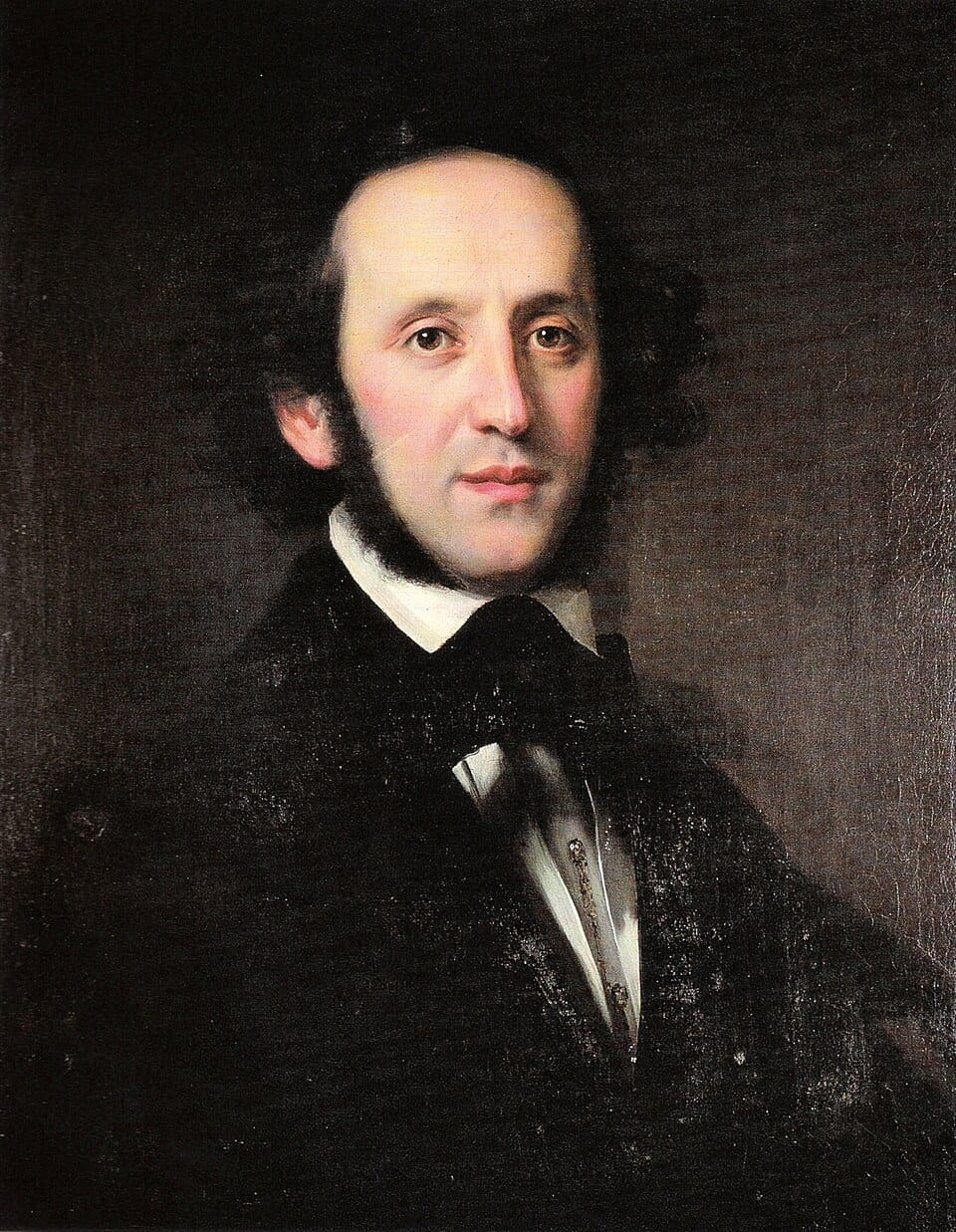
Painting:Eduard Magnus
About the Piece
Conceived during Felix Mendelssohn’s historic walking tour of Scotland in 1829, this romantic masterpiece was directly inspired by the country's turbulent history, wild landscapes, and rich folklore. Though famously sparked by a visit to the ruined chapel at Holyrood Palace, Mendelssohn didn't finish the work until 1842. The symphony is uniquely continuous, with all four movements performed seamlessly without a pause. It is widely celebrated for its bracing, open-air orchestral colors, evocative stormy imagery, and the joyful, skipping folk flavors of its second movement.
Musical Style & the Recording
The Scherzo from the “Scottish” Symphony is Mendelssohn in elfin, quicksilver mode. In Abbado’s LSO recording on Deutsche Grammophon the textures are light and transparent – scampering strings, nimble woodwind figures and feather‑light articulation. It has the feel of something half‑magical and half‑outdoors: a flicker of folk‑dance energy, mist and movement rather than weight or drama. The character is playful, airborne and precise, with everything kept on the brink of vanishing.
Mendelssohn’s Symphony No. 3 ("Scottish") holds a deeply poignant personal meaning for Ben, serving as a beautiful way to honor his late mother [13:56]. She cherished the Scottish islands, particularly the Isle of Mull, and loved Mendelssohn's music [14:03]. Ben is highly drawn to the symphony's evocative, vibrant folk qualities and its soaring, open-air texture, noting that the music makes the listener feel as though they are standing right on a bracing seashore [14:11]. He first properly discovered the piece in the mid-1990s during his time at MCPS, where his boss shared a CD player via two headphone jacks [14:57]. This memorable introduction immediately compelled Ben to purchase the music for himself [15:34].
What Makes This 1968 Recording Special
The 1968 recording featuring Claudio Abbado conducting the London Symphony Orchestra (LSO) is widely celebrated as a landmark classical release:
Youthful Spark: Recorded early in Abbado's illustrious career, it captures a raw, sensitive talent discovering a profound chemistry with the LSO—a partnership that would yield exceptional musical achievements over subsequent decades.
Artistic Character: Critics praise this rendition for belying its age, balancing a breezy, lightweight agility with a deeper exploration of the symphony's darker, romantic hues mixed with lyrical warmth.
Sonic Excellence: Captured at London’s historic Kingsway Hall by Decca, the recording is famed for its exquisitely detailed analogue engineering, offering a full, warm soundscape that highlights glowing, luminous woodwind colours.
I tailored this choice to mimic the "skipping along," joyful, and light nature of Mendelssohn’s scherzo. I purposely picked a North British single grain from independent bottler Douglas Laing to touch upon Mendelssohn’s historic tour through Scotland and his connection to Holyrood.I wanted a dram that was fun and easy to enjoy in a light way, but one that still maintained an elegant depth.

About the Whisky
The pairing is an Old Particular single grain from the North British distillery, 18 years old. As with the Scherzo, it is all about lightness and finesse rather than brute power: vanilla and toffee from long oak ageing, soft cereal sweetness and a very clean finish.
Whisky vitals
Region: Lowland (Edinburgh)
Distillery: North British
Age: 18 years
ABV: c. 48–50% (single‑cask, non‑chill‑filtered – varies by bottling)
Cask: Refill hogshead (Old Particular, Douglas Laing)
Tasting Notes
Nose: fruit‑salad sweetness, vanilla, charred oak, barbecued bananas
Palate: soft vanilla’d oak, toffee and sweet grain, gentle spice
Finish: clean, medium length, with caramel and toasted oak
Ben’s Tasting Notes: Upon taking in the aroma, Ben noted that while the nose was clearly strong, the distinct scent notes were beautifully complex and difficult to put a simple name to. Tasting the 48.4% spirit, he described it as "lively," "quite a sweet one," and carrying a distinct "pepperiness" that "really lingers for quite a long time on the tongue". He further characterised it as feeling "quite fizzy, almost" , revealing a savoury depth of flavour that felt "almost umami" on the descent, with a surprising, subtle pop of "wasabi" and prominent "wood notes"

Photo:Jennifer Taylor
About the Piece
Premiered in 1976, this composition is universally recognised as a definitive pinnacle of 20th-century minimalism. Built entirely upon a cycle of eleven driving chords, the work relies on a relentless, mesmerising pulse that transforms pianos, marimbas, xylophones, clarinets, and female vocalists into a shimmering wall of sound. Rather than conventional melody, the piece shifts organically through subtle acoustic textures, utilising a vibraphone to signal cues and guide changes in section direction. The result is a highly hypnotic tapestry that famously blurs the lines between classical complexity and modern rhythm.
Steve Reich and Musicians (Nonesuch Records)
The opening “Pulses / Section I” of Music for 18 Musicians is one of the classic entrances into Reich’s world. In the Nonesuch recording with Steve Reich and Musicians, a steady marimba and piano pulse anchors slowly changing chords in voices, clarinets and strings. The harmony moves gently but inexorably; patterns phase in and out, and the colour of the ensemble keeps shifting even though the tempo stays constant. The effect is hypnotic and physical at the same time – a kind of breathing grid of sound that can feel both meditative and intensely alert.
Why Ben Selected Music for 18 Musicians
Ben describes Steve Reich’s masterpiece as a university discovery that became an absolute revelation. He is profoundly drawn to its highly hypnotic, circular, and pulsing infrastructure, which captures the listener's focus and creates a uniquely "Zen-like" mental space. Having experienced the piece live five or six times, Ben vividly recalls his first performance at the Barbican with Reich himself, where an entire hour vanished in the blink of an eye. It remains a piece he cannot turn off; he frequently puts it on to hear just the opening and finishes the whole hour. Furthermore, it perfectly embodies Ben's passion for blurring genre boundaries, sitting seamlessly at the junction of classical and pop music. Ben even had the unique privilege of interviewing Reich directly about his work.
What Makes the 1978 Recording Special
The 1978 ECM New Series release remains the definitive landmark recording of Reich’s masterwork. As the piece's premier recording, it captures a raw, authentic energy directly from Steve Reich and Musicians shortly after its world premiere. What sets this version apart is its purely acoustic and organic warmth. Rather than relying on a rigid, mechanical pace, the timing is dictated naturally by the human breath rhythms of the singers and woodwind players, allowing the pulsing textures to literally breathe. Featuring Reich himself on piano and marimba, the ensemble achieves a legendary level of precision, vibrant tonal color, and collective chemistry that subsequent remakes have rarely matched.
To align with the hypnotic, smooth, yet relentless and pulsing framework of Reich’s composition, I wanted a world whisky that offered a pulsing wave of flavor. She highlighted that the hot climate of Goa, India causes the single malt to evaporate much quicker in the barrel than it would in Scotland. This rapid maturation gives the 6-year-old spirit a heavy, older, and deeply warming flavor profile that matches the intensity of the piece.

About the Whisky
Naomi pairs it with a Paul John 6 Year Old Indian single malt bottled by That Boutique‑y Whisky Company. Indian whisky matures faster in Goa’s climate, so a 6‑year‑old here has the weight and complexity of something much older: tropical fruit, spice, a touch of oak grip, and a rhythmic heat that keeps building.
Whisky vitals
Region: Goa, India
Distillery: Paul John
Age: 6 years
Cask: Ex‑bourbon (small‑batch, independent bottling)
Tasting Notes
Nose: tropical fruit (mango, pineapple), caramel, vanilla, soft oak spice, a hint of bonfire smoke
Palate: sweet oak and red berries, brown sugar, with chilli / black‑pepper spice and an oily texture
Finish: long and warming, with berries, caramel and a final crack of pepper
Ben’s Tasting Notes: Ben had never sampled an Indian whisky before this session. He immediately pointed out a brilliant thematic parallel, noting that Reich himself drew tribal inspirations from other continents—including Africa and likely India—when structuring the communal elements of this music. Looking at the glass, Ben noted that the "legs" of the whisky were "quite pronounced," indicating a beautifully oily texture. When tasting it, he immediately caught a dominant "banana thing" alongside hints of mango. He found it slightly sharper than the previous flight entries, noting a continuous, creeping heat at the finish that beautifully punctuated the listening experience. He praised the release as a highly imaginative pairing with a stunning label.
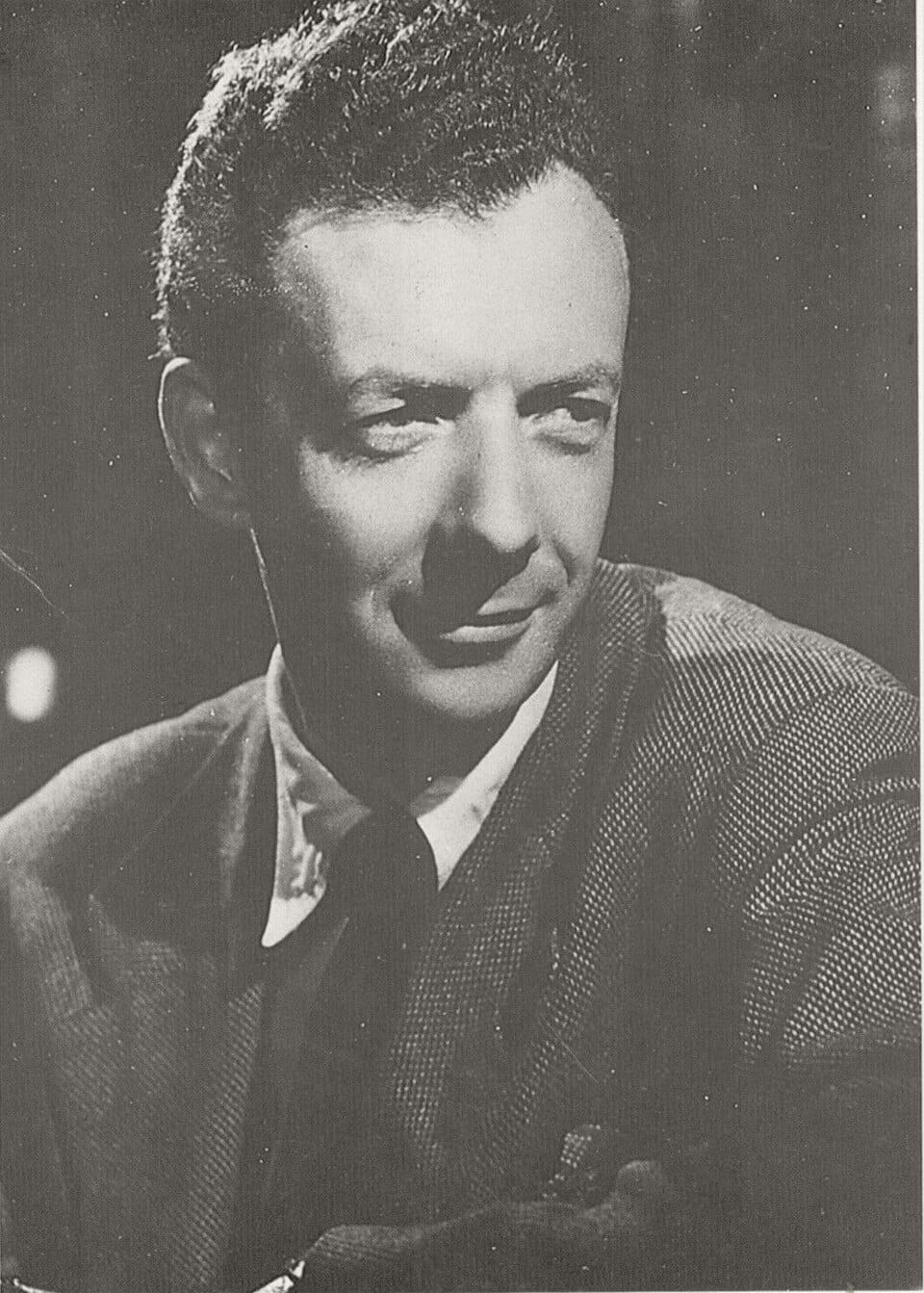
Photo: Anon
About the Piece
Commissioned for the 1962 consecration of the rebuilt Coventry Cathedral—which had been devastated by bombings in World War II—this monumental work is a fierce, deeply emotional statement on the tragedies of war. Britten brilliantly interweaves the traditional Latin Mass for the Dead with the harrowing trench poetry of fallen soldier Wilfred Owen. Structurally, it splits into three spatial tiers: a heavy, dramatic main orchestra and choir for the Latin liturgy; a tight chamber ensemble for the soloists' raw poetry; and a distant, ethereal boys' choir that floats angelically above the chaos below.
Recording: Britten conducting his own War Requiem (Decca)Musical Style & the Recording
The “Requiem aeternam” opens War Requiem with one of Britten’s most unsettling sound‑worlds. In his own Decca recording, the boys’ choir floats from a distance over tolling bells and a slowly moving, dissonant choral texture; the tempo is restrained, almost ritualistic. The music never relaxes into comfort – it hovers between prayer and foreboding, with understated orchestral colours and choral lines that feel haunted. The atmosphere is hushed, cold and expectant, setting up the collision between liturgical text and Wilfred Owen’s poetry that follows in the rest of the work.
Why Ben Selected the War Requiem
Ben chose Benjamin Britten’s War Requiem due to a deep personal connection and its profound musical impact. Having grown up in South Norfolk near Britten’s home in Aldeburgh, the composer’s work always carried local significance for him. First encountering the piece at university, it completely "knocked him for six". Ben considers it a stroke of absolute genius because Britten brilliantly balances a deeply emotional, melodic lyricism with a fiercely experimental edge. He is exceptionally moved by the stark contrast in the opening, where the pure, angelic innocence of the boys' choir cuts through a heavy, rumbling orchestral backdrop that captures the grim reality of war. To Ben, it is a flawless masterwork of immense contemporary relevance where he wouldn't change a single note.
What Makes This Recording Special
This specific 1963 Decca recording, showcased in its 2023 Remastered Version, is widely considered the definitive account of the piece. Conducting his own work, Britten coaxes an unmatched level of raw authority from the London Symphony Orchestra and Chorus. Furthermore, the recording is an iconic milestone in audio engineering. Produced by legendary pioneer John Culshaw at Kingsway Hall, it utilized a revolutionary acoustic setup that physically separated the work's three distinct performing forces into a three-dimensional stereo space. The 2023 remaster strips away decades of tape aging, providing breathtaking modern clarity that gives the haunting vocal layerings and chilling bells an incredibly vivid presence.
Britten's War Requiem is a monumental, intense, and exceptionally hard-hitting masterwork; I felt that nothing else would fit its gravity quite like a whisky of immense, distinctive flavour and narrative depth. I chose a Speyside single malt that was uniquely finished in an Ardbeg peaty barrel by Brighton-based independent bottler The Artful Dodger. This styling keeps the Speyside sweetness at its core while weaving in a serious undercurrent of peaty smoke that hits the consumer in "3D"—capturing a listener's attention from multiple directions simultaneously.
About the Whisky
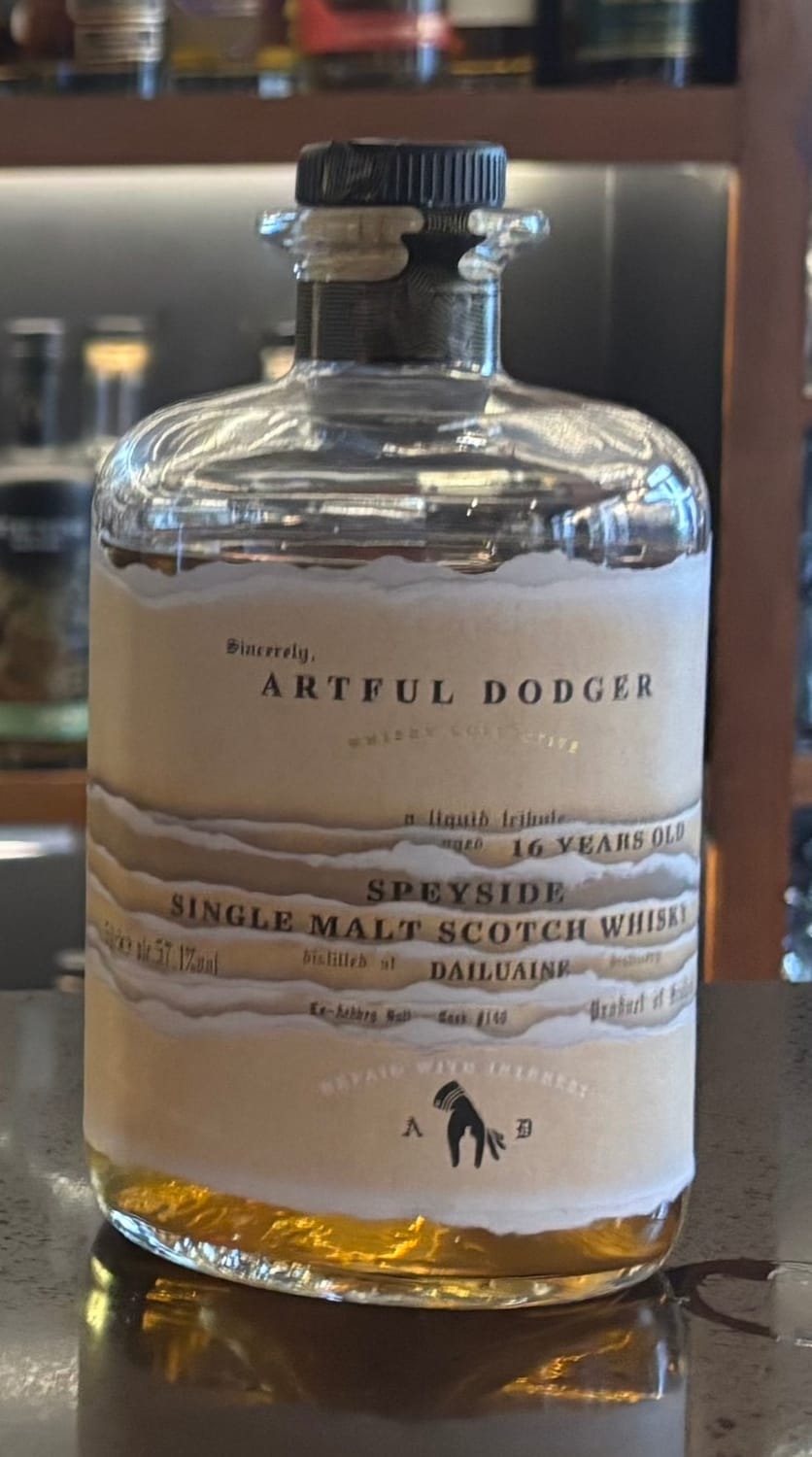
The whisky pairing is a 16‑year‑old Speyside single malt from The Artful Dodger Whisky Collective, finished in an Ardbeg sherry butt. At its core is Speyside sweetness and maturity – honey, soft fruit, polished oak – but the Ardbeg cask adds a veil of smoke and coastal tension over the top.
Whisky vitals
Region: Speyside
Distillery: Dailuaine
Age: 16 years (distilled 2007)
ABV: 57.4% (cask strength)
Cask: Ex‑Ardbeg sherry butt #149
Outturn: 732 bottles (50cl)
Tasting Notes
Nose: candy floss / sticky sweet confection, apfelstrudel with clotted cream, charred oak, subtle delicate smoke, preserved lemon
Palate: toasted oak, light saline notes, delicate wood smoke and charcoal, soft pepper, apple compote
Finish: medium–long; prosciutto / smoked bacon, ashes, a touch of mint
Ben’s Tasting Notes: Visually, Ben noted that this was unexpectedly the lightest-colored whisky of the afternoon, looking "much yellower" and drawing comparisons to a "Chardonnay". Despite its formidable 57.1% cask strength, he jokingly remarked that it "doesn't taste that strong"—a testament to how smoothly integrated the spirit was after a full afternoon of tasting. He highly admired its "real presence," highlighting that the multi-layered flavour profile goes well beyond a simple peat hit. Ultimately, Ben crowned this Artful Dodger bottling as his favourite selection of the afternoon, noting that he was completely won over by its incredible depth and the distinct, savoury "barbecue-ness" that develops on the finish.
Gabriel Schwabe brings Tchaikovsky’s cello works to life in this vivid programme, restoring the composer’s original intentions after decades of altered editions. Released May 2026. Ben did the liner notes for the album (podcast 50 mins o6) a Naxos release
Steve Reich Sample of Electric Counterpoint is used by The Orb (mentioned in the podcast at 32 mins 37 secs)
Listen to all of Mendelsohn's Symphony No. 3 in A minor, Op. 56 “Scottish”, Reich's Music for 18 Musicians and Britten's War Requiem from the playlist below for a full 2.5 hours of music!



POST CATEGORY
More of Naomi's World


The Music and Whisky Pairing you never realised you needed!
Please Drink Responsibly
Created with systeme.io