



From the Dorchester to the Smoky Abyss: Dan Shilladay | S1 E2
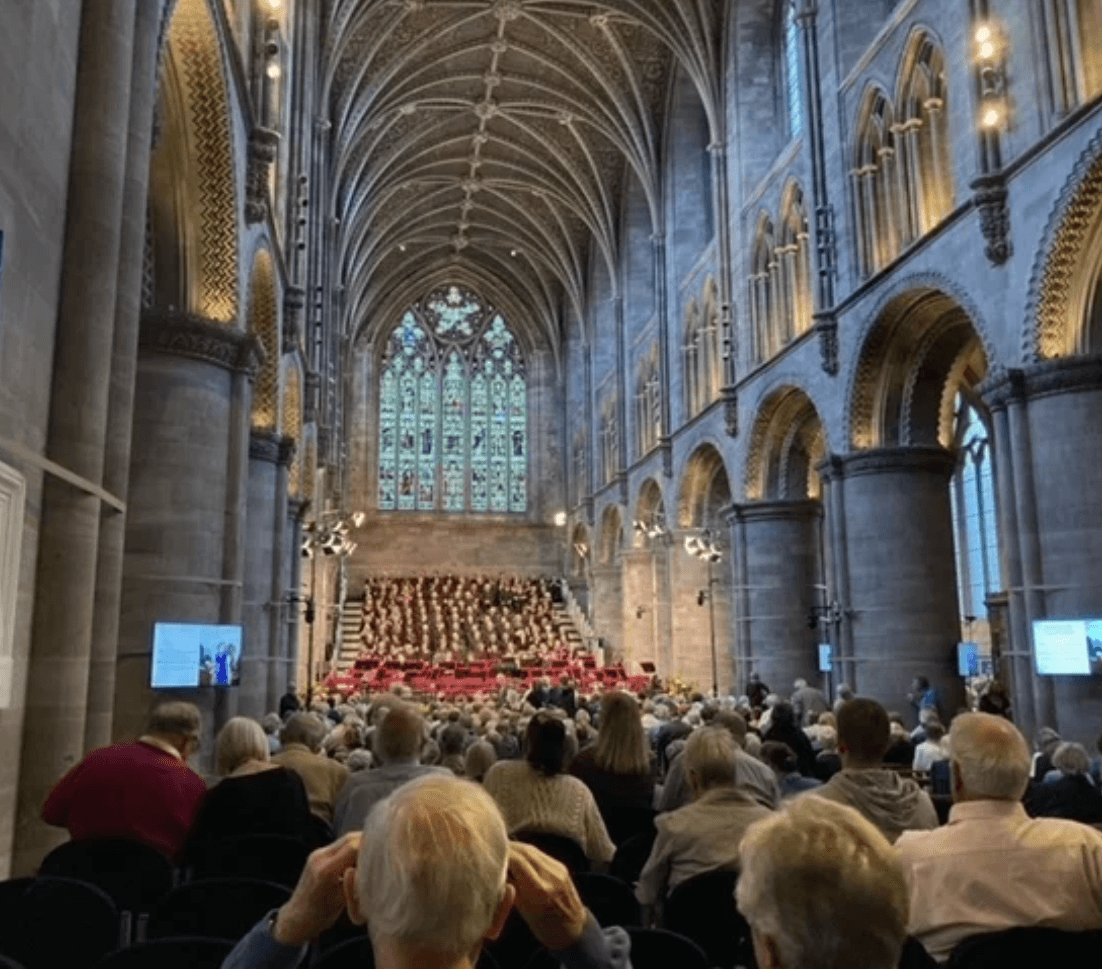
Photo: Liz Isles
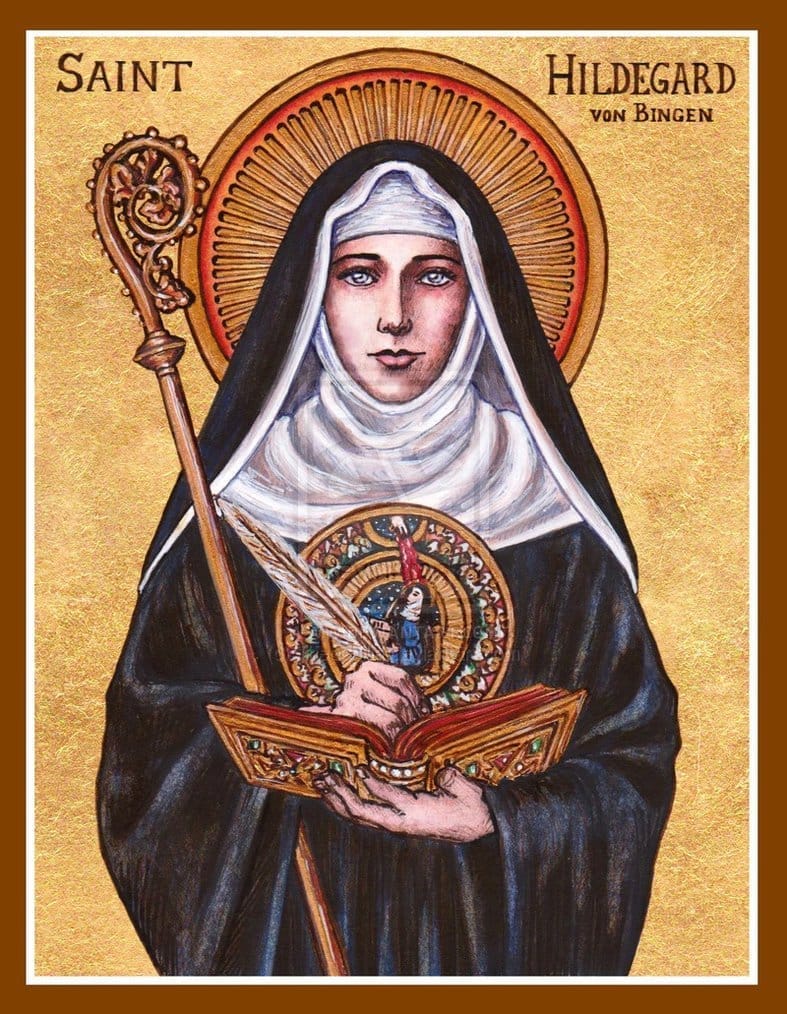
Dan Shilladay is a London-based viola player. He has worked with, among others, the Hanover Band and Orpheus Sinfonia (with which he is principal viola) the Orchestra of the Age of Enlightenment, Britten Sinfonia and the City of Birmingham Symphony Orchestra.
A keen chamber musician, Dan is a founder member of the Berkeley Ensemble, a flexible group of winds and strings specialising in twentieth and twenty-first century British music. Formed in 2008, the group has released eight albums to critical acclaim, the third of which was nominated for a Gramophone award in 2017.
Dan is also in demand as a conductor and educator and directs the Nonesuch Orchestra. He has appeared as a guest conductor with Kingston Philharmonia and Barnet and St Albans Symphony Orchestras and is a regular conductor and tutor on the Yorchestra holiday courses for young players.
In his spare time, he is currently preparing to launch a podcast, How To Fix Classical Music, discussing with leading cultural figures some of the most pressing issues facing the profession today.

Episode 2 - Notes on Notes
Painting by Joseph Karl Stieler
About the Piece
The slow movement of Beethoven’s Ninth (the third movement) is one of the great Adagios of the 19th century. After the turbulence of the first two movements, the music opens out into long, singing lines over gently rocking accompaniment, alternating between radiant B flat major and more searching D major sections. On period instruments with the Orchestra of the Age of Enlightenment, there is a particular transparency to the texture: gut strings and lighter bowing give the sound an earthy glow rather than a saturated Romantic sheen. The style sits between Classical poise and early‑Romantic breadth; the mood is spacious, humane and contemplative, with eruptions of passion kept within a clear, singing frame.
What makes this movement so extraordinary is its sense of time suspended: phrases feel almost endlessly breathable, and the harmony moves with quiet inevitability rather than drama. It’s Beethoven at his most humane — a kind of spacious, compassionate listening.
Musical Style & the Recording
This movement is late Beethoven at the point where Classical proportion starts to feel like it’s opening into something bigger: long cantabile lines, a gentle rocking undercurrent, and harmonic turns that deepen the calm rather than disrupt it. In the Orchestra of the Age of Enlightenment recording, the period‑instrument sound brings a particular transparency — lighter bass, brighter wind colours, and a vocal, grainy warmth from gut strings — so the movement can feel less “symphonic blanket” and more like chamber‑scale detail projected onto a wide horizon. Listen for how the phrasing stays buoyant even at its most tender, and how the clarity of texture lets the inner voices glow.
Both the music and the whisky work through clarity and patience: nothing is rushed, and the beauty is in the slow reveal. The gentle Orkney peat feels like a distant horizon line behind Beethoven’s long phrases — present, grounding, never overpowering. Both whisky and music take time to develop but with a wonderful underlying complexity

About the Whisky
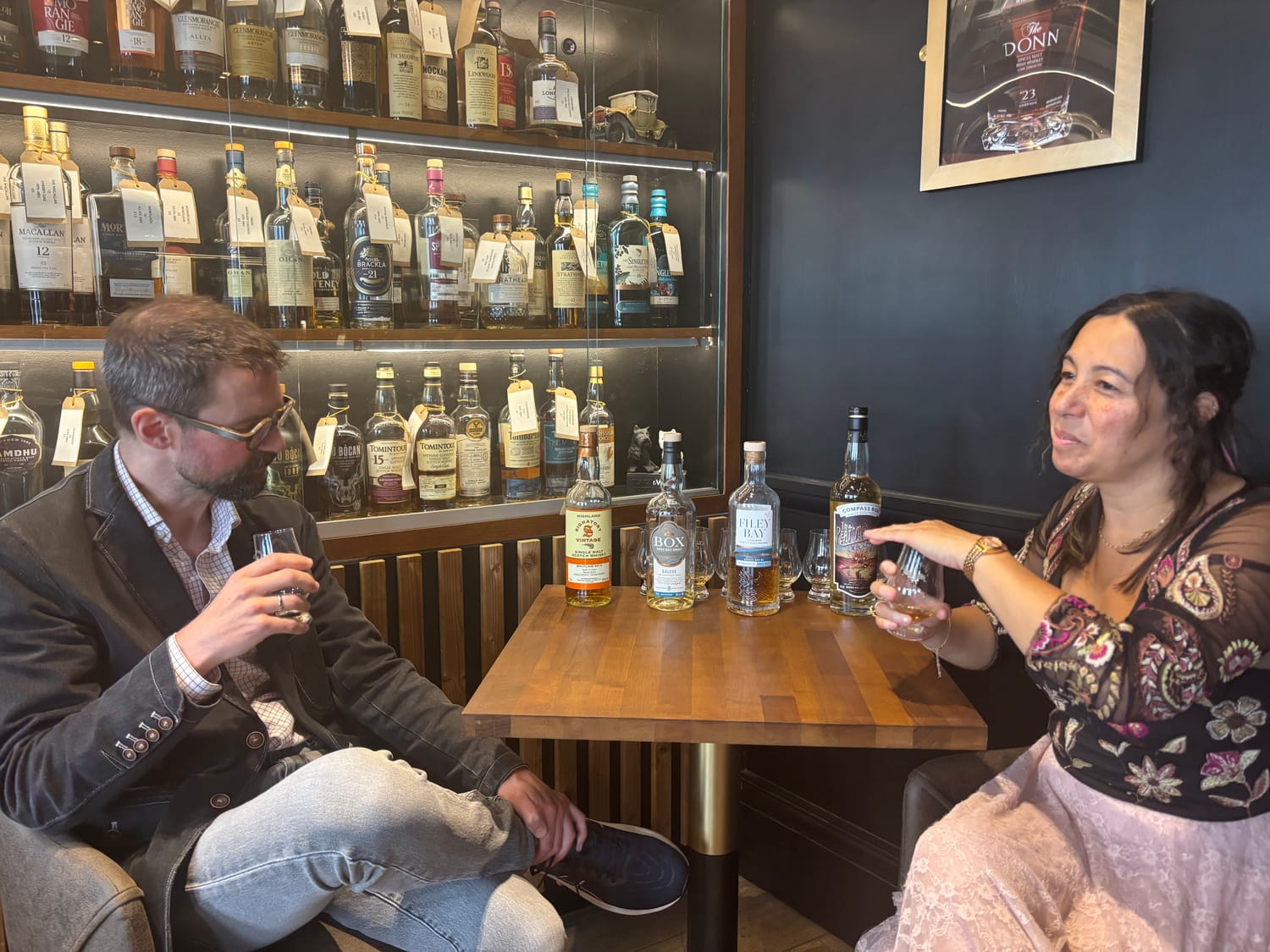
“Whitlaw” is a teaspooned / alias name commonly used for Highland Park spirit when it’s bottled by independents, rather than under the official distillery branding. The name nods to the Whitlaw hills on Orkney, keeping the origin legible without using the trademark. This is a Signatory Vintage bottling — Signatory are one of Scotland’s best‑known independent bottlers, and their releases are often valued for showing a distillery character in a slightly different light than the core range.
One useful bit of context for listeners: independent bottlings like this often come from a specific single cask or small parcel of casks, and the maturation choices can differ from the official Highland Park range (different cask types, different strengths, sometimes a more “natural” presentation). So you can treat it as a snapshot of Highland Park’s DNA under a slightly different lens.
Highland Park’s house style sits in a sweet spot between classic “Islands” smoke and Highland sweetness: heather‑honey, gentle peat, a touch of coastal salt, and a faintly herbal / heathery edge. Independent Highland Park can feel a little less polished and a little more direct — which is great for your format, because it gives you something textural to describe against the music. (Fill in your exact cask / age / ABV from the label if you want it 100% precise.)
Whisky vitals
Origin: Orkney, Scotland (Highland Park; bottled as “Whitlaw” by Signatory Vintage)
Age: check label
Cask: check label (varies by bottling)
Style: lightly peated Island single malt with heather‑honey sweetness and coastal freshness
Tasting Notes
Nose: quality street, honey, butterscotch, soft peat smoke, seaweed.
Palate: sweet malt and toffee, then pepper, coastal saltiness, soft charcoal.
Finish: medium; lingering ash, dried herbs and a faint floral note.
Character: Calm, luminous Orkney peat — sweet‑smoky balance with a coastal lift.
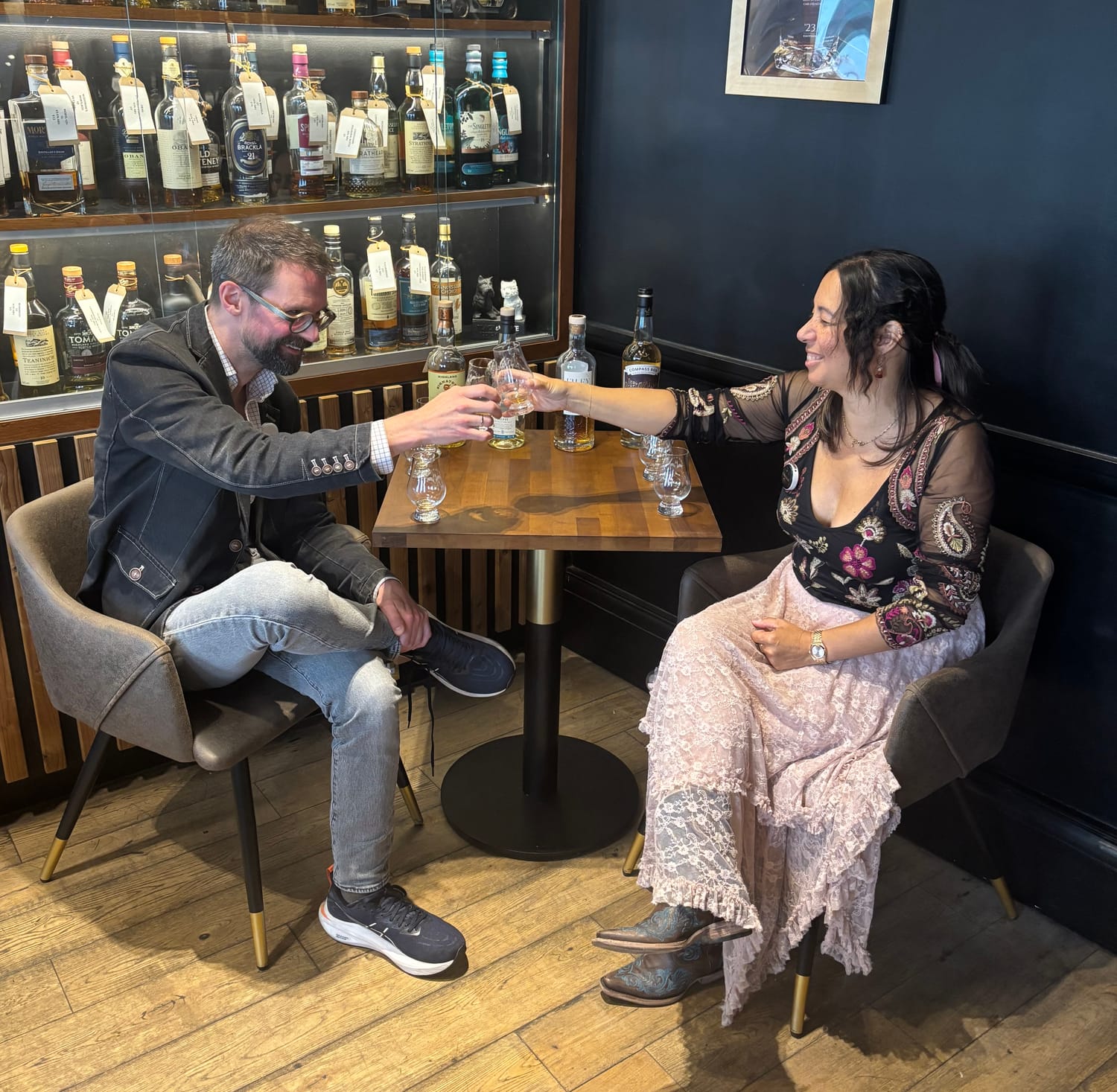
Dan’s Tasting Notes: Dan found it hard to differentiate the aroma's "butterscotch", and he agreed with the mention of seaweed, a spicy edge that becomes buttery later on the palate.
Highlights: We both found that the whisky had a lovely umami finish, with a pepperiness and raspberry notes in this well-rounded Orkney malt.
Thoughts: Dan felt the pairing was so well-suited a piece with lingering depth and a whisky with a long finish. If there was only one whisky he could drink for the rest of his life, this could be it! And it was his favourite whisky and music pairing
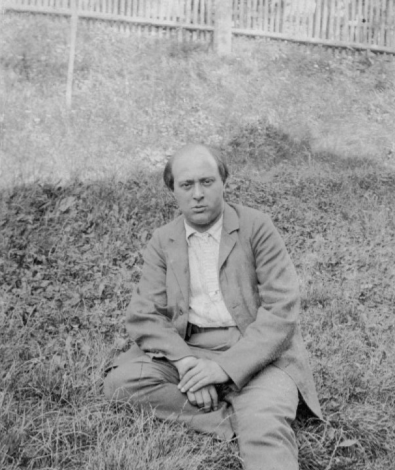
Photo: Unknown
About the Piece
Schoenberg’s Chamber Symphony compresses the forces of a late‑Romantic orchestra into 15 solo instruments and a single, tightly argued movement. The excerpt Dan chose sits in the central area where the texture briefly relaxes (“Etwas ruhiger”), then winds itself back up into the main tempo.
It’s music on a threshold: still rooted in late‑Romantic sonority, but stretched by chromatic lines and dense counterpoint. In a good performance, you hear it as chamber music under a magnifying glass — every line exposed and necessary.
Musical Style & the Recording
This excerpt shows Schoenberg compressing late‑Romantic intensity into something wiry and modern: the harmony still has tonal “gravity,” but it keeps slipping, and the counterpoint feels like a set of tight interlocking mechanisms. With Sir Simon Rattle and the Birmingham Contemporary Music Group, the fact that it’s 15 solo instruments is the point — each line is etched with almost forensic clarity, so the music reads as hyper‑charged chamber music rather than an orchestral wash. You can follow individual timbres as they pass motives around, and the build back toward the main tempo feels like pressure steadily tightening rather than a single dramatic swell.
Like Schoenberg’s exposed lines, this whisky is high‑definition: bright, savoury, taut, and structured. The sharp peppery wood notes read like the music’s nervous energy — a steady pressure rather than a broad, romantic glow.
About the Whisky
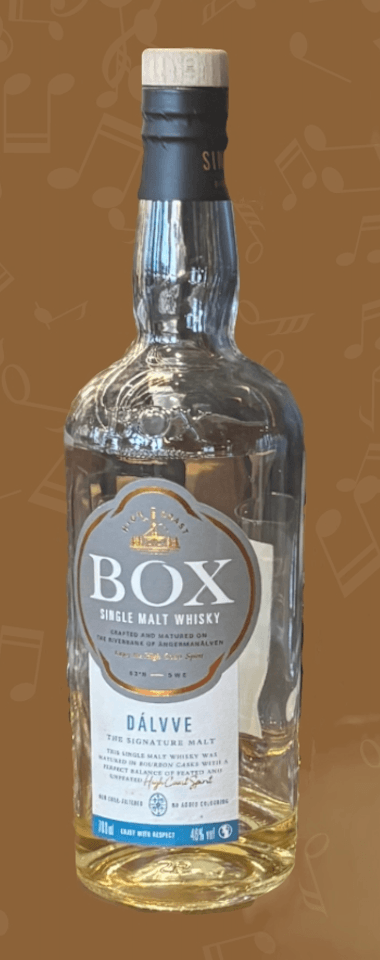
Dálvve (meaning “winter” in Southern Sami) is one of the flagship malts from High Coast Distillery in northern Sweden — formerly known as Box. High Coast have built a reputation for producing single malts with a very clear sense of place: big seasonal temperature swings (warm summers, cold winters) can encourage active maturation, and the distillery leans into a modern, transparent style where you can taste the cereal character as well as the cask.
Dálvve is often built around first‑fill ex‑bourbon casks (you can call out the vanilla/fudge/coconut side of that) and is frequently described as lightly smoky rather than peat‑driven in the Islay sense — more a clean thread of smoke / char alongside cereal sweetness, citrus and spice. It was one of the distillery’s first ongoing “signature” malts, so it’s also a good narrative dram: this is what the producer thinks represents them.
Tasting Notes
Nose: green apple, lemon zest, vanilla, fresh oak, white pepper, white wine grape.
Palate: clean malt sweetness, vanilla cream, then drying ginger and oak spice.
Finish: medium; barley, citrus pith and a light, peppery warmth.
Character: Bright, structured and high‑definition — a “clean line” whisky with tightening spice.
Whisky vitals
Origin: High Coast Distillery, Ådalen, Sweden
Age: typically 5–6 years
Cask: predominantly first‑fill ex‑bourbon
Style: modern Nordic single malt – precise, cereal‑forward, oak spice rather than peat
Dan’s Tasting Notes: He noted the legs sat like a pearl necklace around the glass. not what he was expecting, woodwork class at School
Highlights: He found it hugely savoury with an aroma like a woodwork shop. The whisky is unapologetic.
Thoughts: Dan appreciated the direct nature of the whisky, which is just what it is, a bit like Schoenberg. An expert pairing in his words.
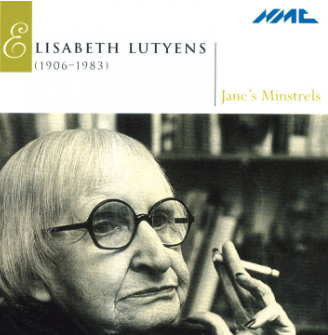
Photo: NMC album cover of Elizabeth Lutyens Chamber Concerto No.1
About the Piece
Elisabeth Lutyens was a pioneer of British serialism, introducing twelve‑tone technique into a musical culture that often preferred pastoral comfort. Requiescat is intimate and psychologically precise: grief rendered through small, deliberate gestures rather than sweeping sentiment.
In a performance like Jane Manning’s, the vocal line feels both human and unsparing — as if the music is refusing easy consolation. The accompaniment’s pointillist colour and careful spacing create an emotional landscape where silence matters as much as sound.
Musical Style & the Recording
Lutyens’ language is modernist and unsentimental, but never abstract for its own sake: the serial/atonal writing is used to carve out an intimate, psychologically exact space, where tiny intervals and timbral shifts carry the weight of the text. In the Jane Manning / Jane’s Minstrels recording, everything is presented with a kind of clean, deliberate focus — Manning’s vocal line is clear‑edged and communicative, and the ensemble articulation makes the pointillist writing feel like a series of precisely placed lights in the dark. The spaciousness around the sounds becomes part of the drama, so the piece feels less like “expressive singing” and more like grief being observed, measured, and endured in real time.
Lutyens’ writing is controlled, and exacting — and double oak has that same firm, shaping grip, but there is still beauty in the flavour which echoes the beautiful tune that runs through the work. The sweetness is there, but it’s channelled through structure: a good analogue for music that won’t let emotion spill into easy catharsis.
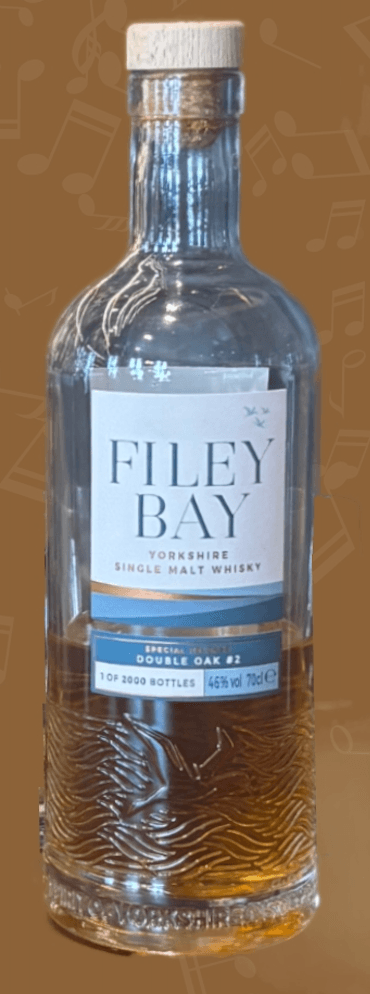
About the Whisky
Filey Bay is the single malt range from Spirit of Yorkshire Distillery, one of the key names in the newer wave of English whisky. Their identity is unusually tangible: the business is rooted in a working farm and local brewing heritage, and the whisky often leans into a “field‑to‑bottle” story — local barley, coastal climate, and hands‑on production.
“Double Oak” is a useful teaching whisky in your format because the concept is simple and audible on the palate: it combines the familiar sweetness of ex‑bourbon maturation (vanilla / toffee) with the more assertive structure of virgin oak (fresh oak spice, tannin, toasted wood). In other words, you get the comfort and the frame.
Tasting Notes
Nose: vanilla fudge, honey, pear and apple, sea breeze, toasted oak.
Palate: orchard fruit, crème brûlée, malt biscuit, cinnamon, oak tannin.
Finish: fairly long; salted caramel with gently drying spice.
Character: Sweet‑to‑structured — bright fruit up front, then a firm oak frame.
Whisky vitals
Origin: Spirit of Yorkshire Distillery (Filey Bay), England
Casks: combination of ex‑bourbon and virgin oak (“Double Oak”)
Style: unpeated, coastal English single malt with vanilla‑oak richness over bright malt
Character: somewhere between light Speyside and a breezy seaside dram
Dan’s Tasting Notes: The nose was described as having violets and like a chocolate box. Though he felt he got less information on every further sniff!
Highlights: A sweetness with a sense of Steel: Elizabeth never compromised with her music
Thoughts: This was Dan’s favourite whisky of the afternoon. He found the sense of hard steel something supported by iron girders with sweeter higher notes. He had a visual appreciation while drinking the whisky. He thought it was a fabulous connection with the music and the composer Elizabeth Lutyens.
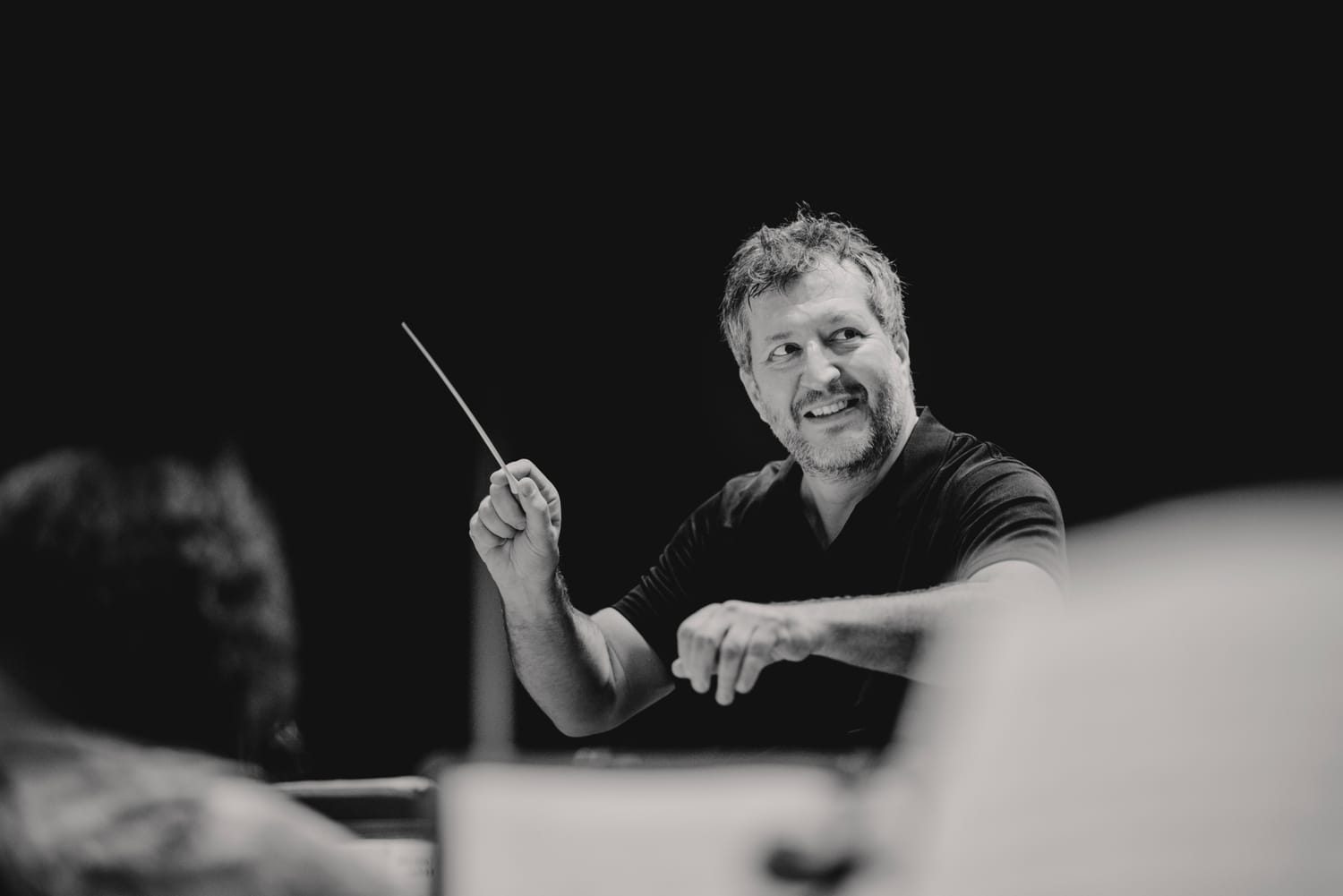
Photo: Marco Borggreve
About the Piece
Adès’ Powder Her Face made a splash in the 1990s: a score that can glitter, sneer, dance, and suddenly turn the knife. The opening of the Luxury Suite is a concentrated hit of that style — tango‑inflected rhythm, sharp harmonic clashes, lush orchestration with something slightly poisonous under the surface.
It’s music that understands glamour as performance — and enjoys the moment just before the façade cracks.
Musical Style & the Recording
This Overture is pure Adès: post‑modern collage with razor‑sharp control — tango/cabaret swagger and big‑band gloss constantly undercut by harmonic “wrongness” and sudden shifts in perspective. In Adès’ own recording with the London Philharmonic Orchestra, the playing has a vivid, almost cinematic punch: winds and percussion cut through with acid brightness, and the orchestral sheen feels deliberately over‑lit, like glamour that’s starting to look dangerous. The rhythm has dance‑floor confidence, but it keeps slipping out of alignment; listen for how the score toys with seduction and menace at the same time, so sweetness can turn to steel in a bar.
Adès’ Overture has swagger and shock value — it’s luxury with danger and naughtiness. A big, smoky blended malt fits that theatre: dramatic, attention‑grabbing, a real caricature of a track that is comedic and raunchy, almost like a musical as the Overture to this Opera (Adès’ orchestration is sublime). Something cartoonish about the whisky so suits this overture piece. This piece is perhaps an outlier of Adès' style.

About the Whisky
Compass Box are known for treating blending like composition: taking mature component whiskies and building a deliberate flavour architecture, then bottling with an emphasis on transparency, texture, and balance. The Peat Monster is one of their most recognisable bottlings — effectively a curated “peat spectrum” dram designed to give you smoke, sea‑spray and medicinal edges without flattening everything into ash.
Depending on batch/era, the recipe has evolved, but the intent stays consistent: a core of Islay peat (often associated publicly with malts such as Caol Ila and Laphroaig in more recent recipes), framed so you still get citrus oil, vanilla creaminess and spice rather than only smoke.
Tasting Notes
Nose: bonfire smoke, iodine/seaweed, lemon peel, vanilla, butterscotch, smoked cheese.
Palate: rich peat smoke, charred wood, black pepper, brine, with a sweet malt core.
Finish: long; ashy and salty, with lingering smoke and citrus oil.
Character: Big, theatrical peat with blending polish — coastal power held in balance.
Whisky vitals
Origin: Scotland (Compass Box; blended malt)
• Age: NAS (varies by batch)
• Cask: varies by batch (often refill casks; Compass Box recipe varies)
• Style: heavily peated blended malt with maritime smoke, citrus and vanilla creaminess
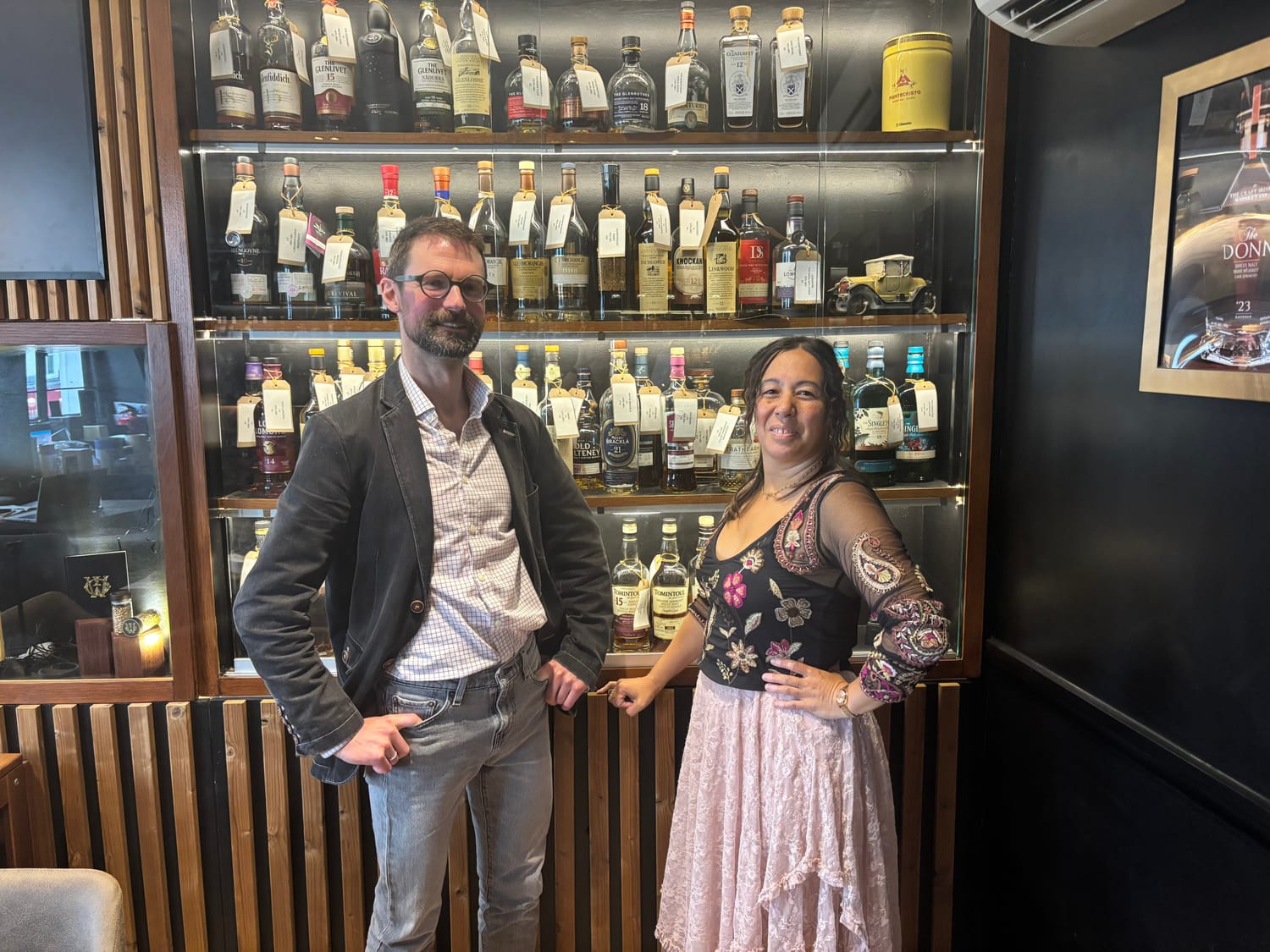
Dan’s Tasting Notes: The whisky colour was light in the glass, the legs were beaded. naomi called it a ribbed glass, like a lampshade Dan commented
Highlights: Dan got a big hit of butterscotch on the nose with a peaty hit later. And he asl smelt smoked cheese. describing the finish as having a "umami" quality. Sweet then hell smokey on the taste,
Thoughts: A huge hit iof sure and a clund of smoke after. He never conisdered whisky having an elment of time to it and whe ndofferent flavours hit. The "bouncy" rhythms of the music found a match in this young, exuberant whisky, which Sam noted packs a punch while remaining refreshing
A link to possibly Beethoven's most famous Symphony - no 5. Sadly, there is no Orchestra of Age of Enlightenment recording available, but here is Royal Concertgebouw Orchestra of the Netherlands
The Berkeley Ensemble release of Dorothy Howell's string Quartet mentioned on the podcast - 59 min 21 secs
Listen to all of Beethoven's 9th Symphony and all of Schoenberg's Chamber Symphony No. 1, Op. 9b as mentioned in the podcast by Dan.
POST CATEGORY
More of Naomi's World

The Music and Whisky Pairing you never realised you needed!
Please Drink Responsibly
Created with systeme.io